

VIDEO: Wireworms in Western Washington
Wireworms are wrecking havoc in some western Washington farms. This video looks at a trap-cropping experiment designed to lure them away from valuable vegetables.
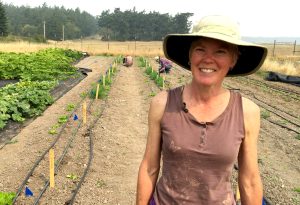
Wireworms in Western Washington
For more than two decades, Christine Langley has successfully run Lopez Harvest organic farm on Lopez Island in Washington state’s famed San Juan Islands. But for most of that, she wasn’t fighting wireworms. Now they’re her top pest problem.

Can Caging Orchards Protect Apples?
When brown marmorated stink bug hit the Mid-Atlantic region, it wreaked havoc with the tree fruit industry and disrupted effective IPM programs. Elizabeth Beers and her colleagues at Washington State University are working to make sure that doesn’t happen again in Washington’s valuable apple and pear orchards.

Preparing for the Invasion: Emerald Ash Borer in Colorado
As part of its urban planning, the city of Denver recently asked residents what they wanted most in a revitalized downtown and they chose trees. It’s a shame so many of them are about to die.
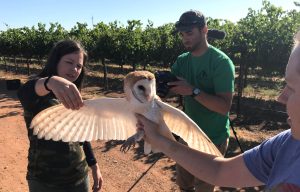
VIDEO: Helping Barn Owls Help Growers
Barn owls are rodent-killing machines – natural predators of gophers and voles and other rodent pests of agriculture. This video looks at new research helping growers use both the owls and chemicals, in concert and safely.

Targeting Weed Seeds at Harvest
As herbicide-resistant weeds become more common across the country, researchers and growers are looking for other ways to control weeds. In Colorado, they’re looking at harvest weed-seed control, IPM-friendly methods designed to destroy or remove weed seeds during harvest.
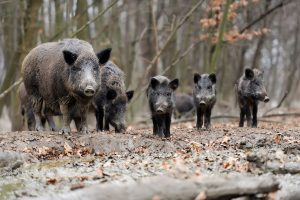
Feral Swine Wreak Havoc
As pests go, wild pigs are huge – and hugely effective.

Learning to Manage – and Live with – Coyotes in Southern California
Forrest Gump believed life was like a box of chocolates – you never know what you’re going to get inside. It’s much the same for graduate student Danielle Martinez, except she isn’t reaching for tasty chocolates. She’s digging into coyote stomachs as part of a larger research effort studying urban wildlife in Southern California.
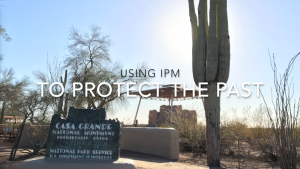
VIDEO: Using IPM to Protect a Long-Vanished Community
In the Arizona desert, the National Park Service and the University of Arizona teamed up to develop an integrated pest management program to protect sensitive archaeological sites from digging pests. IPM is being used to protect a community that vanished 1,000 years ago.

Bed Bug Website and Work Group Share Knowledge and Resources
Through a website or workshop, the members of the Western IPM Bed Bug Work Group can teach you everything you ever wanted to know about bed bugs – and then some.
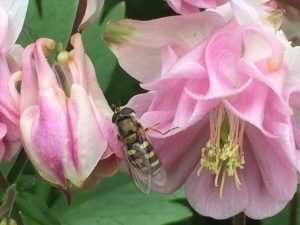
Rooting for the Underdogs of the Pollination World
As pollinating insects, bees get all the credit – but they don’t do all the work. new research is documenting the unsung heroes of the pollinating world.
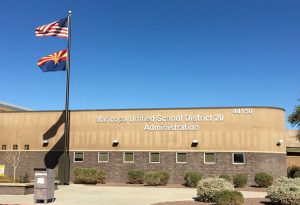
School District Creates a Healthier Environment by Adopting IPM
Every day, nearly 7,000 students come to the Maricopa Unified School District’s six elementary schools, two middle schools and one high school outside Phoenix, Arizona. They’re joined on the campuses by more than 800 teachers and other employees. And every one of those people comes to schools that are healthier to learn in and teach in because the district embraced integrated pest management.

Pest or Beneficial: Earwigs in Apples
For growers, a fundamental element of integrated pest management is knowing what pest and beneficial species are in your fields. But what if there’s an insect and no one knows if it’s good or bad? That was the question for apple growers about earwigs.

What’s Plaguing that Peony?
Proper identification of a disease is the critical first step for growers to apply the correct treatment. In peonies, proper disease identification was a problem. If a plant was diseased, growers assumed that their plants were sick with Botrytis gray mold. The reality was more complex.
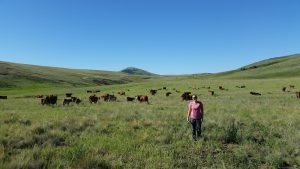
Grassland Restoration Effects on Native Bees and Spiders
Throughout the West, many native grasslands have been degraded – overgrazed, overtilled, burned or overrun by invasive weeds like Medusahead or cheatgrass. While many restoration efforts only look at plant communities or endangered species, this research looked at native spider and bee communities.
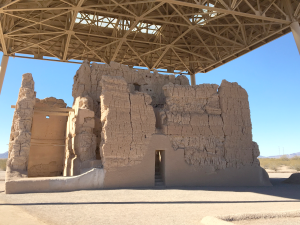
Protecting a Long-Vanished Community with IPM
The practices and principles of integrated pest management are used across the country to protect communities from pests. And in the Arizona desert, those same principles are being used to protect a community that disappeared 600 years ago.

Eco-Label Programs Promote IPM, but Aren’t Perfect
Eco-label programs have clear benefits and promote more sustainable pest-management and growing practices. They also provide certain benefits for growers but have downsides as well. Significant differences between the programs can make judging eco labels challenging for consumers, and with dozens of similar yet competing certification programs and standards, chaos is likely for the foreseeable future.

Nevada in Photos: Fighting Invasives on Land and Lake
Nevada’s state flag has the words “Battle Born” above a silver star and crossed sagebrush sprays, celebrating its creation during the American Civil War. Battle born is also a pretty good description of the efforts of many people working for state, federal and local agencies to keep invasive weeds in check in Nevada’s challenging landscapes. Here’s a look.
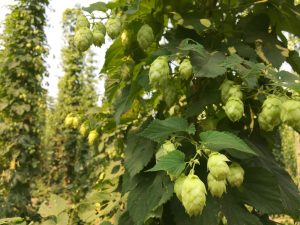
Powdery Mildew Control in Oregon Hops: The (Pint) Glass is Half Full
When the fungal disease powdery mildew first appeared in hop yards in Oregon in the late 1990s, it was devastating from both a production and integrated pest management standpoint. In the 20 years since that initial outbreak, researchers and growers have learned a lot about the disease and how to manage it. Just in the past few years, fungicide applications have dropped about 40 percent.
VIDEO: Powdery Mildew in Oregon Hops
Hops growers in Oregon have been battling powdery mildew for nearly 20 years. But new research into the fungal disease has already cut fungicide application by 40 percent, and shows the potential of a coordinated, areawide approach in essentially eliminating it.

VIDEO: Alfalfa Seed, Alkali Bees and IPM
Washington alfalfa seed growers go to great lengths to protect the bees that pollinate their crop. Those bees are native alkali bees that live underground in the Walla Walla Valley, and leaf cutter bees they import from Canada.
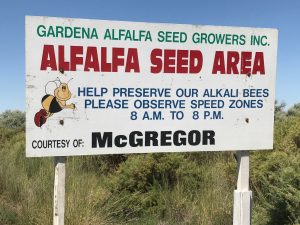
To Protect their Bees, Alfalfa Seed Growers Embrace IPM
A lot of growers take steps to protect beneficial insects as part of their integrated pest management programs, but how many have speed limits? Alfalfa seed growers in Washington’s Walla Walla Valley do.

Tribal Bed Bug Workshop Dispels Myths
There is a lot of fear about bed bugs, and a stigma surrounding them that can keep some people from seeking help with a bed bug infestation. But bed bugs have been hanging around humans for a long time and aren’t going anywhere anytime soon.

Decoding Chemical Communications to Control Insects
University of California, Riverside chemical ecologist Jocelyn Millar identifies the chemical signals insects use to communicate, then synthesizes versions of them to help monitor, trap or disrupt their activities. Lygus bug is just one of dozens of species Millar and his team are working on. The common thread is that they all communicate chemically, and decoding those chemical signals can create new ways to control those species where they are pests.
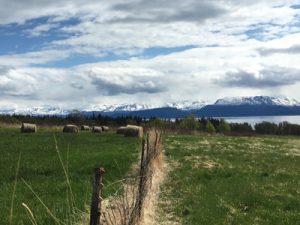
Alaska In Photos: America’s Arctic Agriculture
Alaska is huge, remote and still largely pristine. It’s 2.3 times the size of Texas, with a population of just 738,000 people and 175,000 moose. While small, the state’s ag industry is important. Ornamentals, aquaculture, potatoes and cattle are top crops, and home-based and small-scale production help improve food security. Here’s a little of what we saw and learned on a recent visit.
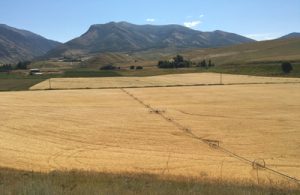
Utah in Photos: Managing Pests in a Unique State
Utah is one of the most urbanized states in the nation, with 90 percent of the population living on just 1.1 percent of the land. It’s also the second driest state, averaging less than 10 inches of rainfall a year, and has alkaline soils with low organic matter. It’s a challenging environment to farm in. Keeping invasive pests out of Utah – and minimizing the damage they cause once they arrive – is a major focus.

New Mexico in Photos: Loving the Land of Enchantment
In New Mexico, the chile pepper is king. Hay is grown on 40 times the acreage and pecans rack up nearly 4.5 times the farm sales, but you don’t see either of those crops on the “Welcome to New Mexico” signs as you drive into the state. You see red and green chile peppers. Chile isn’t a crop, it’s culture. Like Florida citrus and Idaho potatoes, New Mexico’s identity is tied to a crop.

Montana in Photos: Defending the Last Best Place
The state that calls itself “The Last Best Place” has a lot to protect from pests: vast fields of wheat and barley driving its agriculture sector, miles of mountains, forests and rangeland forming an outdoor paradise, and clear rivers and lakes at the upper end of the North American watershed. Here’s a look.
VIDEO: Battling Bird Cherry in Anchorage
European bird cherry, also known as the May Day tree, is one of the most pervasive invasive species in Anchorage, Alaska. Here’s how it got there, and what folks are now doing to get rid of it.

VIDEO: Controlling Invasive Species on Wyoming’s Snake River
The Teton County Weed & Pest District’s Snake River Project helps keep invasive weeds from getting established in the Snake River corridor in western Wyoming. Here’s a look at one part of that effort.

VIDEO: Gold Spotted Oak Borer, or GSOB, in Southern California
The gold spotted oak borer is a tiny beetle causing huge damage in Southern California. It infests the region’s towering oak species – coast live oak and canyon live oak – and can kill a centuries-old tree in just a year or two. This video follows the beetle from San Diego to Los Angeles counties to see what damage it’s doing and what many fear may come next.

VIDEO: Teaching IPM through the Diagnostic Lab at Montana State
Every sample that comes to the Schutter Diagnostic Lab at Montana State University is an opportunity to teach someone else about integrated pest management.
VIDEO: Gold Spotted Oak Borer, or GSOB, in Irvine Regional Park
Weir Canyon in the Irvine Regional Park is the only known infestation of gold spotted oak borer in Orange County – and land managers are working hard to protect the park and keep the destructive beetle from spreading.

VIDEO: Learning about Insects in Anchorage
Anchorage-area sixth graders learn about forest insect ecology during the 43rd annual Outdoor Week at the Bureau of Land Management’s Campbell Creek Science Center.
VIDEO: Biocontrol on Montana’s National Bison Range
Biocontrol helps the National Bison Range in Montana manage invasive weeds. Here’s how they do it – and you can too.

VIDEO: Where to Get Good Gardening Advice
In this video, Ariel Agenbroad from University of Idaho offers great tips for home gardeners about where to get good pest-management advice.

VIDEO: Why Growers Embrace Salmon-Safe Farming
In growing numbers, farmers in the Walla Walla Valley are embracing salmon-safe farming practices to better manage their land, benefit local rivers – and get higher prices for their products.

VIDEO: Urban Farm Pest Pressures and Solutions
Learn about the pest pressures faced by urban farmers — and how integrated pest management provides economical solutions — with Ariel Agenbroad, Local Food & Farms Advisor with University of Idaho Extension.
VIDEO: Safflower Makes an Areawide IPM Program Work
In Kings County, California, safflower is an important rotational crop that improves the soil health and makes farming more productive. It’s also the key to an areawide IPM program that manages pests and reduces pesticide sprays.

VIDEO: Training Ag Professionals in IPM
A multi-state program in the Columbia River Basin is improving agricultural practices by training young ag professionals in integrated pest management.

VIDEO: Planting Flower Strips for Native Bees
Montana State University researchers discuss flower strips of nine native plants that provide habitat for native bees and an additional income source for farmers who can collect and sell the flower seeds.
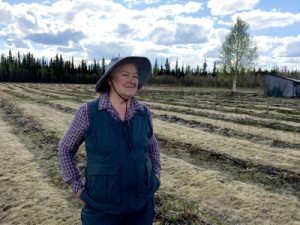
A Home-Grown Industry: Alaskan Peonies Fills a Global Gap
Not very long ago, if you were planning a summer wedding or special occasion, one flower you could not get at any price was a peony. The elegant, lacy blooms simply weren’t available. Alaska changed all that.
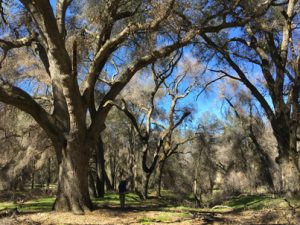
Gold Spotted Oak Borer Threatens Oak Woodlands and Ecosystems across Southern California
From San Diego County to Los Angeles County, oak trees are dying rapidly, killed by a tiny beetle called the gold spotted oak borer. In areas where the invasive pest has become established, it’s killing 80 to 90 percent of the mature oaks – a dieback that’s fundamentally changing the landscape and the ecosystem the oaks support.

Are Birds an Economic Pest on Northwest Dairies? New Research Aims to Find Out
That birds can be a pest for fruit growers is no surprise. But what about to cows? Are birds a pest on dairies? Do they bother the milk cows? And do they cause economic losses? Researchers in Washington state are trying to find out.

Hill-Climbing Cows May Bring Big Benefits to Western Rangeland and Ranchers
Conventional wisdom says cows don’t go up steep slopes. They don’t climb hills and don’t travel very far from water. But some cows never got that memo, and researchers are looking into whether naturally hill-climbing cows can provide production and environmental benefits in the rugged West.

Idaho Researchers Embrace Collaboration
Anyone who complains about university research being too theoretical or Ivory Tower hasn’t visited the University of Idaho Aberdeen Research and Extension Center. There, multi-disciplinary teams regularly work together on complex investigations into pests of the state’s important crops like potatoes, wheat and barley.
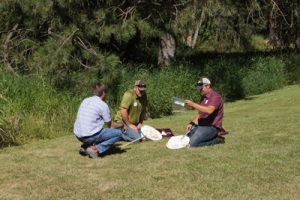
IPM Training Program Targets Young Ag Professionals in the Pacific Northwest
Identification of pests and beneficials is one of the first principles of integrated pest management, and the core of a train-the-trainers program that’s been successfully improving the skills of young ag professionals in rural Oregon, Washington and Idaho since 2009.
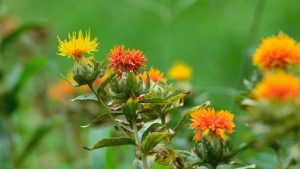
Safflower Makes an Areawide IPM Program Work
Safflower, a low-value oil seed crop, is the key to an incredibly successful soil health and areawide integrated pest management program in California — and a great illustration of how IPM works.
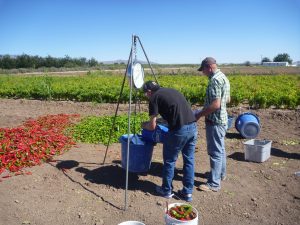
Can an Economic Model Show Growers the Importance of Reducing the Weed Seed Bank?
How important is it to keep weed seeds out of vegetable fields? Mexico State University’s Brian Schutte recently looked at that very question. Funded by the Western IPM Center, Schutte studied one particular weed, tall morning glory, in Southwest chile pepper fields, and developed an economic model growers can use to see for themselves how managing the weed seed bank can help their operations.
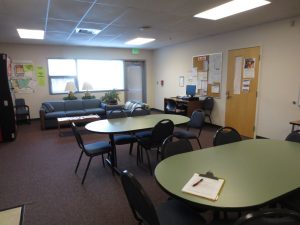
School IPM Protects Kids from Pests and Pesticides
Both pests and pesticides are potentially harmful for kids and adults in schools. Common schools pests like the German cockroach or mice can carry disease and cause allergic responses. And children can be more at risk for harm from sprayed pesticides because of their behavior – playing on the floor or in grassy fields, for instance – and because of their developing physiology.