
At first glance, agriculture in Wyoming and agriculture on Hawaii or Guam don’t have much in common.
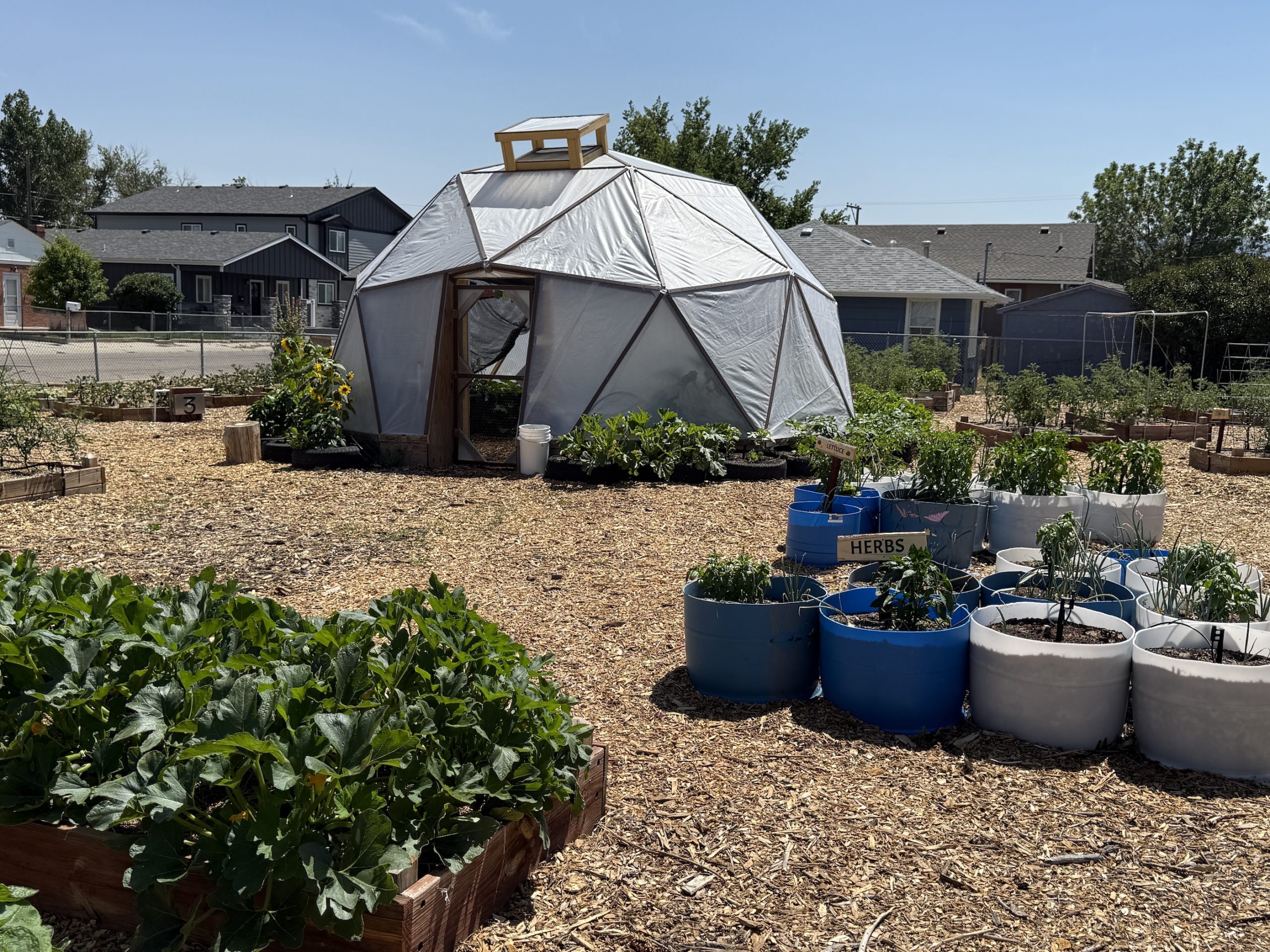
But growers in both the tropical Pacific and the northern prairie can benefit from enclosed production spaces – structures like hoop houses, high tunnels or geodesic domes – which is why Wyoming-developed domes will soon be popping up in the islands.
It’s a roundabout tale that began during a Pacific islands agricultural needs assessment funded by the Western Integrated Pest Management Center in 2018. Those initial pre-pandemic meetings led to follow-up sessions that in 2023 reached University of Wyoming Extension Specialist Jeff M. Edwards.
“I was invited to a needs assessment session in Hawaii, where enclosed-space production is something growers wanted to explore further,” he explained. “I was able to tell them, ‘I might have a solution.’”
Edwards has been studying enclosed space production since 2009 and looking at domes ever since he was asked to help put together a14-foot dome that had been delivered to a local school.
“There was an 8-page instruction sheet at the very bottom of the box, it had no plans for a door and no covering material,” he said. “It was a mess and the kit cost $5,000.”

Knowing there had to be a better way, Edwards found an unpatented design for a 22-foot-diameter dome. He refined the design and developed a materials list and construction manual so folks could build the domes themselves. Materials – all available at large home centers – cost about $2,500. He’s led dome-building workshops and erected 30 throughout Wyoming.
In early August, as part of a Western Sustainable Agriculture Research and Education program grant, Edwards led a two-day whirlwind tour through several of those domes, showing prospective dome-builders from Hawaii how they are being used in Wyoming.
Pepe Miranda, an agronomist with Farms and Coffee Solutions, was one of the tour participants.
“In Hawaii, we have a 365-day-a-year growing season yet 95 percent of our produce is imported,” he said. “There are a lot of people interested in producing more of our own food on the islands but just need a little encouragement. A little excitement.”
He’s hoping erecting a dome for the Koni School District (which has an aquarium containing two sharks at one if its campuses) will inspire young islanders to take more interest in farming.
“I know the ag teachers there and every Friday they hold a school market,” he said. “This can add to it.”
Peggy McKibbin of Hekela Ranch was another tour participant and sees domes as a way to protect the market vegetables she grows on her multi-generational family farm.
“They’ll definitely provide protection from the wind and be a barrier to bugs,” she said. “After seeing these, I’m convinced it will help my farm.”
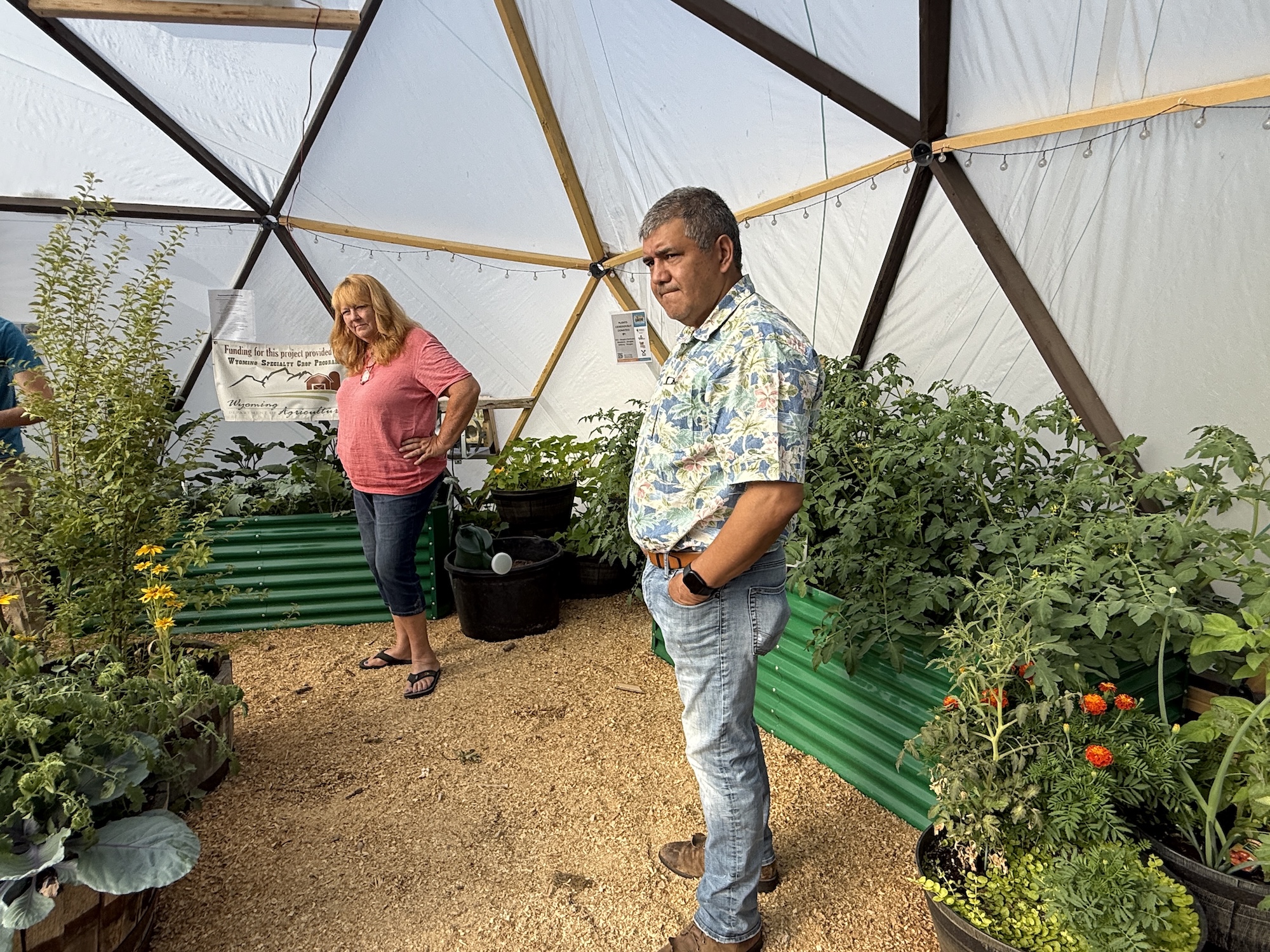
In Wyoming, domes protect vulnerable plants from the state’s abrasive, drying winds and extend the growing season up to 45 days in both the spring and fall. In the islands, abrasion protection and pest control are likely to be the primary benefits of the domes.
“It’s not just protection from the wind, but from natural rainfall where we think domes will help,” Edwards said. “On the islands, the rain carries volcanic ash that abrades plants and allows diseases to start.”
This winter, Edwards will be part of a group building several domes in Hawaii, experimenting with the designs to adapt the dome to the tropical climate.
“One idea we have is to raise the base two feet and wrap the lower level with screen material rather than solid plastic, and use screens on the peak as well,” he said. “That’d maximize airflow and keep the temperature inside the dome down.”
One stop on the tour was the Urban Thistle Farm in Casper, Wyoming, a community garden sponsored by the Casper Housing Authority that has three domes filled with growing produce. Steve Lovelace, a retired schoolteacher, volunteers on the farm and used to be a proponent of high tunnels.
“I taught geometry so I like rectangles,” he said. “Rectangles are cozy. And I was totally a fan of high tunnels until I experienced domes. Domes are the way to go. They are really solid, stronger than high tunnels and the shape of the dome sheds snow really well.”
Hopefully, Hawaii never has to test that last bit…