
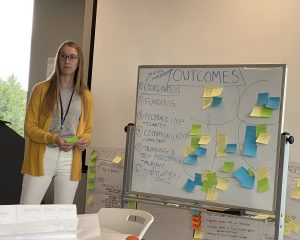
Work Group Aims to Make New Endangered Species Rules Workable
“If it’s so complex that it’s impossible, then no one wins.”
That was the key takeaway from a recent two-day workshop in Vancouver, Washington about implementing new U.S. Environmental Protection Agency pesticide-use rules to protect endangered and threatened species.

Group Educates Health Care Providers about Pesticide-Related Illnesses
Pesticide Educational Resources Collaborative-Medical produces educational materials and resources on pesticides, specifically targeting health care providers so they can recognize, treat and report pesticide-related illnesses.

IPM Experience is Helping Schools Plan for Reopening Amid COVID Concerns
As students return to classrooms in the fall of 2020, coronavirus is very much on people’s minds. In the West, having an IPM program in place seems to be helping schools plan for reopening.
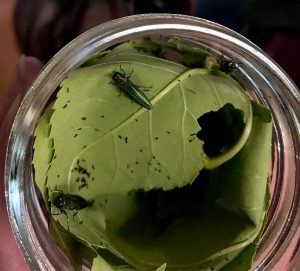
Dropping the Emerald Ash Borer Quarantine Could Impact the West
The U.S. Animal and Plant Health Inspection Service has proposed lifting the domestic quarantine designed to slow the spread of emerald ash borer, an action that could speed the destructive insect’s introduction into Western states that have so far kept it at bay.

Bed Bug Website and Work Group Share Knowledge and Resources
Through a website or workshop, the members of the Western IPM Bed Bug Work Group can teach you everything you ever wanted to know about bed bugs – and then some.

What’s Plaguing that Peony?
Proper identification of a disease is the critical first step for growers to apply the correct treatment. In peonies, proper disease identification was a problem. If a plant was diseased, growers assumed that their plants were sick with Botrytis gray mold. The reality was more complex.

Eco-Label Programs Promote IPM, but Aren’t Perfect
Eco-label programs have clear benefits and promote more sustainable pest-management and growing practices. They also provide certain benefits for growers but have downsides as well. Significant differences between the programs can make judging eco labels challenging for consumers, and with dozens of similar yet competing certification programs and standards, chaos is likely for the foreseeable future.

Decoding Chemical Communications to Control Insects
University of California, Riverside chemical ecologist Jocelyn Millar identifies the chemical signals insects use to communicate, then synthesizes versions of them to help monitor, trap or disrupt their activities. Lygus bug is just one of dozens of species Millar and his team are working on. The common thread is that they all communicate chemically, and decoding those chemical signals can create new ways to control those species where they are pests.
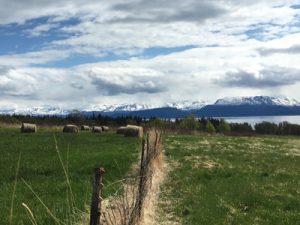
Alaska In Photos: America’s Arctic Agriculture
Alaska is huge, remote and still largely pristine. It’s 2.3 times the size of Texas, with a population of just 738,000 people and 175,000 moose. While small, the state’s ag industry is important. Ornamentals, aquaculture, potatoes and cattle are top crops, and home-based and small-scale production help improve food security. Here’s a little of what we saw and learned on a recent visit.
VIDEO: Battling Bird Cherry in Anchorage
European bird cherry, also known as the May Day tree, is one of the most pervasive invasive species in Anchorage, Alaska. Here’s how it got there, and what folks are now doing to get rid of it.

VIDEO: Learning about Insects in Anchorage
Anchorage-area sixth graders learn about forest insect ecology during the 43rd annual Outdoor Week at the Bureau of Land Management’s Campbell Creek Science Center.

VIDEO: Where to Get Good Gardening Advice
In this video, Ariel Agenbroad from University of Idaho offers great tips for home gardeners about where to get good pest-management advice.

VIDEO: Urban Farm Pest Pressures and Solutions
Learn about the pest pressures faced by urban farmers — and how integrated pest management provides economical solutions — with Ariel Agenbroad, Local Food & Farms Advisor with University of Idaho Extension.
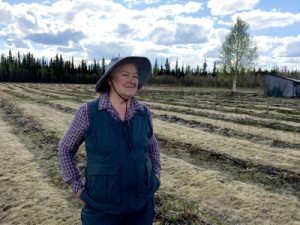
A Home-Grown Industry: Alaskan Peonies Fills a Global Gap
Not very long ago, if you were planning a summer wedding or special occasion, one flower you could not get at any price was a peony. The elegant, lacy blooms simply weren’t available. Alaska changed all that.

Hill-Climbing Cows May Bring Big Benefits to Western Rangeland and Ranchers
Conventional wisdom says cows don’t go up steep slopes. They don’t climb hills and don’t travel very far from water. But some cows never got that memo, and researchers are looking into whether naturally hill-climbing cows can provide production and environmental benefits in the rugged West.
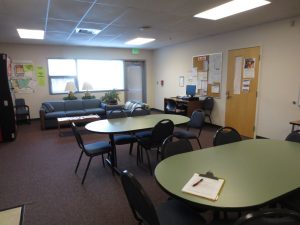
School IPM Protects Kids from Pests and Pesticides
Both pests and pesticides are potentially harmful for kids and adults in schools. Common schools pests like the German cockroach or mice can carry disease and cause allergic responses. And children can be more at risk for harm from sprayed pesticides because of their behavior – playing on the floor or in grassy fields, for instance – and because of their developing physiology.
IPM Adoption is Widespread in the West
Many integrated pest management practices are so widely adopted in Western agriculture they have become conventional pest management. That is one of the key findings of a new report by the Western Integrated Pest Management Center titled Adoption and Impacts of Integrated Pest Management in Agriculture in the Western United States.
Citizen Scientists in Alaska Watch for Invasive Species
To expand the number of eyes watching out for exotic and invasive pests, the Alaska IPM Program recruits “Citizen Scientists” to be on the lookout for unusual insects, plants and disease organisms throughout the state.