

Connecting Wyoming and Hawaii with Agricultural Domes
At first glance, agriculture in Wyoming and agriculture on Hawaii or Guam don’t have much in common. But growers in both the tropical Pacific and the northern prairie can benefit from enclosed production spaces – structures like hoop houses, high tunnels or geodesic domes – which is why Wyoming-developed domes will soon be popping up in the islands.
Work Group Aims to Make New Endangered Species Rules Workable
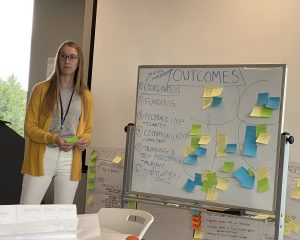
“If it’s so complex that it’s impossible, then no one wins.”
That was the key takeaway from a recent two-day workshop in Vancouver, Washington about implementing new U.S. Environmental Protection Agency pesticide-use rules to protect endangered and threatened species.

Understanding Hawaii’s Ungulate Issues
Hooved mammals – ungulates in scientific parlance – aren’t native to the archipelago but have been brought to the islands over the past centuries. Now, population explosions of wild pigs, feral sheep and goats, big-horned mouflon sheep and axis and black-tailed deer are altering ecosystems, affecting fisheries, imperiling agriculture and causing economic harm. New research aims to document how much damage those non-native ungulates are doing – the first step in understanding what could or should be done about it.

Using Giant Hornets’ Chemical Communications Against Them
When the Northern Giant Hornet was discovered in Washington state, state and federal officials mobilized quickly to try to eradicate it. Due to the efforts of that team, which included Dr. Jacqueline Serrano, an expert in detecting, decoding and synthesizing insect chemical signals, no nests or hornets have been found in the state since 2021.
Guam hasn’t been so fortunate. Invaded in 2016 by a different giant hornet, the Great Banded Hornet, the island is in danger of having the invasive, predatory insect become firmly established, which could damage Guam’s apiculture and agricultural industries. So it will be harder to eradicate – but with Western IPM Center funding, Serrano and Christopher Rosaria from the Guam Department of Agriculture’s Biosecurity Division are going to try.

Group Educates Health Care Providers about Pesticide-Related Illnesses
Pesticide Educational Resources Collaborative-Medical produces educational materials and resources on pesticides, specifically targeting health care providers so they can recognize, treat and report pesticide-related illnesses.
Coffee Leaf Rust Arrives in Hawaii
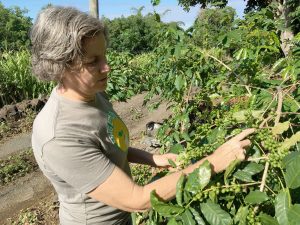
Coffee leaf rust has come to Hawaii. The damaging fungus was first tentatively identified on coffee plant samples collected on Maui two weeks ago and has also now been reported on the Hilo side of the Big Island. As of November 2, it hadn’t been confirmed in the coffee-growing area around Kona, which sits opposite Hilo on Hawaii.

IPM Experience is Helping Schools Plan for Reopening Amid COVID Concerns
As students return to classrooms in the fall of 2020, coronavirus is very much on people’s minds. In the West, having an IPM program in place seems to be helping schools plan for reopening.

Building a Sweet Niche for Hawaiian Cacao
On Hawaii, a dedicated group of cacao growers, processors and researchers are building a cacao industry aimed at producing distinctive, high-quality cacao, the raw ingredient the world’s top chocolatiers seek to craft their best bars. Keeping pests off the islands is a necessary part of that plan.
IPM Protects Macadamia Nut Production on Hawaii
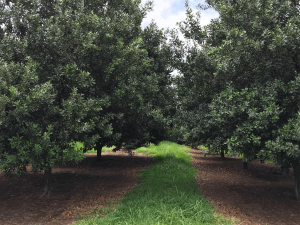
Macadamia nuts are an identity crop for Hawaii, like chile in New Mexico or potatoes in Idaho. Macadamia orchards cover some 18,000 acres on Hawaii and generate $53 million annually. But since the arrival of the macadamia felted coccid in 2005, maintaining that production and profitability has become more difficult. Now IPM is showing growers how to manage the tiny scale insect before it causes branch dieback and kills trees.

IPM Keeps Hawaii’s Coffee Industry Brewing
In 2010, the coffee berry borer threatened Hawaii’s coffee industry. An IPM program that promotes end-of-season sanitation was developed by growers and researchers and has kept the industry thriving.

Bed Bug Website and Work Group Share Knowledge and Resources
Through a website or workshop, the members of the Western IPM Bed Bug Work Group can teach you everything you ever wanted to know about bed bugs – and then some.

Eco-Label Programs Promote IPM, but Aren’t Perfect
Eco-label programs have clear benefits and promote more sustainable pest-management and growing practices. They also provide certain benefits for growers but have downsides as well. Significant differences between the programs can make judging eco labels challenging for consumers, and with dozens of similar yet competing certification programs and standards, chaos is likely for the foreseeable future.

Decoding Chemical Communications to Control Insects
University of California, Riverside chemical ecologist Jocelyn Millar identifies the chemical signals insects use to communicate, then synthesizes versions of them to help monitor, trap or disrupt their activities. Lygus bug is just one of dozens of species Millar and his team are working on. The common thread is that they all communicate chemically, and decoding those chemical signals can create new ways to control those species where they are pests.

VIDEO: Where to Get Good Gardening Advice
In this video, Ariel Agenbroad from University of Idaho offers great tips for home gardeners about where to get good pest-management advice.

VIDEO: Urban Farm Pest Pressures and Solutions
Learn about the pest pressures faced by urban farmers — and how integrated pest management provides economical solutions — with Ariel Agenbroad, Local Food & Farms Advisor with University of Idaho Extension.

School IPM Protects Kids from Pests and Pesticides
Both pests and pesticides are potentially harmful for kids and adults in schools. Common schools pests like the German cockroach or mice can carry disease and cause allergic responses. And children can be more at risk for harm from sprayed pesticides because of their behavior – playing on the floor or in grassy fields, for instance – and because of their developing physiology.
IPM Adoption is Widespread in the West
Many integrated pest management practices are so widely adopted in Western agriculture they have become conventional pest management. That is one of the key findings of a new report by the Western Integrated Pest Management Center titled Adoption and Impacts of Integrated Pest Management in Agriculture in the Western United States.

Pesticide Safety Training for Hawaii’s Farm Sector
Farmworker safety training often comes with language challenges – but few places more so than Hawaii, where the College of Tropical Agriculture and Human Resources at the University of Hawaii recently produced two pesticide-safety training charts in English, Mandarin, Tagalog and Thai.