

Research Aims to Improve Control of Ascochyta Blight in Chickpea
Montana chickpea growers – who produce a third of the U.S. chickpea crop – face a serious foliar crop disease known as Ascochyta blight. It’s caused by a poorly understood pathogen that requires growers to make multiple fungicide applications each season. It’s a recipe for fungicide resistance development. What growers need to know is what conditions lead to spore dispersal, when growers should make the first fungicide application, and how often they will need to make repeated applications of different fungicides to effectively manage the disease.

Wyoming Develops an IPM Program to Combat Insecticide Resistance in Alfalfa Weevil
It’s a simple fact of pest management: overuse any one control technique and the pest will eventually develop resistance to it. It’s exactly what happened with the alfalfa weevil in Wyoming, and why University of Wyoming researchers are developing a farm-scale IPM program to combat it.
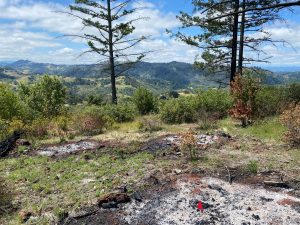
Exploring a Fiery Method for Replacing Invasive Grasses
In California and throughout the West, land managers face huge challenges on huge acreage. Threats include invasive annual grasses, drier summers and changing fire regimes. To combat this combined threat, UC Davis researchers are testing a burn-and-replant method as a combined solution.
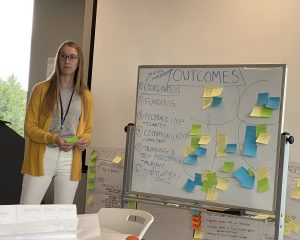
Work Group Aims to Make New Endangered Species Rules Workable
“If it’s so complex that it’s impossible, then no one wins.”
That was the key takeaway from a recent two-day workshop in Vancouver, Washington about implementing new U.S. Environmental Protection Agency pesticide-use rules to protect endangered and threatened species.

Group Educates Health Care Providers about Pesticide-Related Illnesses
Pesticide Educational Resources Collaborative-Medical produces educational materials and resources on pesticides, specifically targeting health care providers so they can recognize, treat and report pesticide-related illnesses.

Evaluating Chaff Lining for Weed Control in Dryland Crops
For weed scientists and growers, Western Australia is a cautionary tale. Herbicides failed, resistant weeds spread unchecked and non-chemical control methods had to be developed on the fly to keep the grain industry in business. As herbicide-resistant weeds spread in the United States, researchers are trying to adapt some of the lessons learned in Australia here at home, including harvest weed-seed control, before the situation gets as dire.

IPM Experience is Helping Schools Plan for Reopening Amid COVID Concerns
As students return to classrooms in the fall of 2020, coronavirus is very much on people’s minds. In the West, having an IPM program in place seems to be helping schools plan for reopening.

Looking for Answers as Kochia Rolls Across the West
Kochia is a tumbling weed plaguing growers and ranchers from Central Canada to West Texas. “It’s salt tolerant, heat tolerant, cold tolerant,” said Kent Davis, a crop consultant with Crop Quest in Colorado. “I want to kill the damn stuff, there’s no question about it, but you have to admire it at the same time.”
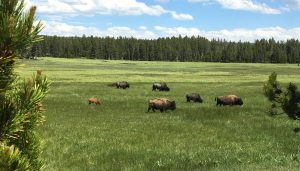
IPM in Yellowstone
The thing that makes integrated pest management so powerful is that it can be adapted to manage pests in any environment – even an environment as unique as Yellowstone National Park and a pest as big as a 900-pound bull elk.

IPM in Montana
Montana is known as “The Last Best Place.” An outdoor paradise, and home to wheat, barley and pulse crop production, Montana actively promotes integrated pest management to protect its agriculture and natural areas.
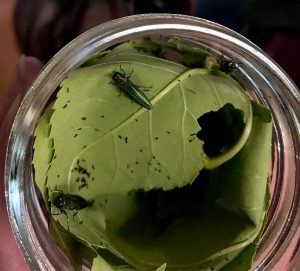
Dropping the Emerald Ash Borer Quarantine Could Impact the West
The U.S. Animal and Plant Health Inspection Service has proposed lifting the domestic quarantine designed to slow the spread of emerald ash borer, an action that could speed the destructive insect’s introduction into Western states that have so far kept it at bay.

Feral Swine Wreak Havoc
As pests go, wild pigs are huge – and hugely effective.

Bed Bug Website and Work Group Share Knowledge and Resources
Through a website or workshop, the members of the Western IPM Bed Bug Work Group can teach you everything you ever wanted to know about bed bugs – and then some.

What’s Plaguing that Peony?
Proper identification of a disease is the critical first step for growers to apply the correct treatment. In peonies, proper disease identification was a problem. If a plant was diseased, growers assumed that their plants were sick with Botrytis gray mold. The reality was more complex.

Eco-Label Programs Promote IPM, but Aren’t Perfect
Eco-label programs have clear benefits and promote more sustainable pest-management and growing practices. They also provide certain benefits for growers but have downsides as well. Significant differences between the programs can make judging eco labels challenging for consumers, and with dozens of similar yet competing certification programs and standards, chaos is likely for the foreseeable future.

Decoding Chemical Communications to Control Insects
University of California, Riverside chemical ecologist Jocelyn Millar identifies the chemical signals insects use to communicate, then synthesizes versions of them to help monitor, trap or disrupt their activities. Lygus bug is just one of dozens of species Millar and his team are working on. The common thread is that they all communicate chemically, and decoding those chemical signals can create new ways to control those species where they are pests.

Montana in Photos: Defending the Last Best Place
The state that calls itself “The Last Best Place” has a lot to protect from pests: vast fields of wheat and barley driving its agriculture sector, miles of mountains, forests and rangeland forming an outdoor paradise, and clear rivers and lakes at the upper end of the North American watershed. Here’s a look.

VIDEO: Controlling Invasive Species on Wyoming’s Snake River
The Teton County Weed & Pest District’s Snake River Project helps keep invasive weeds from getting established in the Snake River corridor in western Wyoming. Here’s a look at one part of that effort.

VIDEO: Teaching IPM through the Diagnostic Lab at Montana State
Every sample that comes to the Schutter Diagnostic Lab at Montana State University is an opportunity to teach someone else about integrated pest management.
VIDEO: Biocontrol on Montana’s National Bison Range
Biocontrol helps the National Bison Range in Montana manage invasive weeds. Here’s how they do it – and you can too.

VIDEO: Where to Get Good Gardening Advice
In this video, Ariel Agenbroad from University of Idaho offers great tips for home gardeners about where to get good pest-management advice.

VIDEO: Urban Farm Pest Pressures and Solutions
Learn about the pest pressures faced by urban farmers — and how integrated pest management provides economical solutions — with Ariel Agenbroad, Local Food & Farms Advisor with University of Idaho Extension.

VIDEO: Planting Flower Strips for Native Bees
Montana State University researchers discuss flower strips of nine native plants that provide habitat for native bees and an additional income source for farmers who can collect and sell the flower seeds.

Hill-Climbing Cows May Bring Big Benefits to Western Rangeland and Ranchers
Conventional wisdom says cows don’t go up steep slopes. They don’t climb hills and don’t travel very far from water. But some cows never got that memo, and researchers are looking into whether naturally hill-climbing cows can provide production and environmental benefits in the rugged West.

School IPM Protects Kids from Pests and Pesticides
Both pests and pesticides are potentially harmful for kids and adults in schools. Common schools pests like the German cockroach or mice can carry disease and cause allergic responses. And children can be more at risk for harm from sprayed pesticides because of their behavior – playing on the floor or in grassy fields, for instance – and because of their developing physiology.

Grazing Guidelines for Noxious Weed Control
Researchers, ranchers, and land managers know that livestock grazing can be a valuable and selective noxious-weed management tool, and this guide summarizes all the effective techniques.
IPM Adoption is Widespread in the West
Many integrated pest management practices are so widely adopted in Western agriculture they have become conventional pest management. That is one of the key findings of a new report by the Western Integrated Pest Management Center titled Adoption and Impacts of Integrated Pest Management in Agriculture in the Western United States.
Early Detection Combats Weed Invaders
Managing invasive weeds is a lot like planning a military defense. It’s easier to defeat a small number of invaders than a large army. It’s easier to respond to a limited incursion than fight a multi-front battle. And having an early warning system can make all the difference. In the fight against invasive weeds in Montana, early detection and rapid response is a key strategy for keeping some of the West’s worst weeds from gaining a foothold in the state.

Montana Develops Weed Seedling Guide for the Northern Great Plains
Rapid and accurate identification of weeds at the seedling stage can save producers and land managers time and money but most weed identification guides only provide information about the mature stage of the plants. Not this one.

New Guide Helps Land Managers Control Medusahead
As an ecosystem-transformer species, medusahead is among the worst weeds. Not only does it compete for resources with more desirable species, but it changes ecosystem function to favor its own survival at the expense of the entire ecosystem.