
Research Examines Barriers to Grazing for National Forest Management
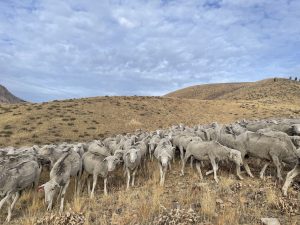
Targeted grazing – using livestock to intentionally manage vegetation – can excel at treating large patches of edible invasive plants and can also create fuel breaks to reduce wildfire risk. So why don’t U.S. Forest Service staff use it more often to manage national forests? That’s the question Briana Swette, a postdoctoral fellow working with Dr. Kelly Hopping at Boise State University, wanted to answer.
Plant Risk Evaluator Tool Helps Identify Potentially Problematic Plants
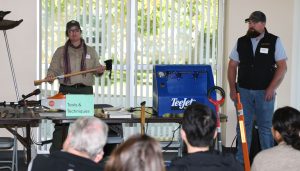
The easiest pest to manage is the one that’s not there. That’s why prevention and avoidance are first two principles of integrated pest management’s “PAMS Approach,” with monitoring and suppression following behind. It’s also the rationale behind the Plant Risk Evaluator Tool, an online database to evaluate the potential for ornamental and horticultural plants to become invasive weeds in different areas and environments.
Exploring a Fiery Method for Replacing Invasive Grasses
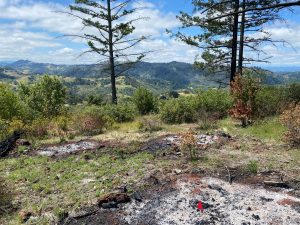
In California and throughout the West, land managers face huge challenges on huge acreage. Threats include invasive annual grasses, drier summers and changing fire regimes. To combat this combined threat, UC Davis researchers are testing a burn-and-replant method as a combined solution.
Work Group Aims to Make New Endangered Species Rules Workable
“If it’s so complex that it’s impossible, then no one wins.”
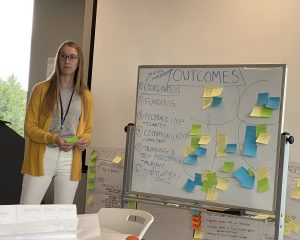
That was the key takeaway from a recent two-day workshop in Vancouver, Washington about implementing new U.S. Environmental Protection Agency pesticide-use rules to protect endangered and threatened species.

Aphids, Irrigation Ditches and Satellites: Biocontrol Research in Nevada
Alfalfa-eating aphids are only about an eighth of an inch long. But the tiny sap-sucking insects are a serious pest for growers, capable of stunting or even killing alfalfa plants. In the field they’re difficult to see from even a few feet away, so the last thing you might think of using for research into biological control of aphids are satellites orbiting 300 miles above Earth. Yet that’s exactly what researchers at the University of Nevada, Reno are indeed using – and they’re seeing things from space you just can’t see from the ground.

Group Educates Health Care Providers about Pesticide-Related Illnesses
Pesticide Educational Resources Collaborative-Medical produces educational materials and resources on pesticides, specifically targeting health care providers so they can recognize, treat and report pesticide-related illnesses.
Electric Weed Control Shows Promise
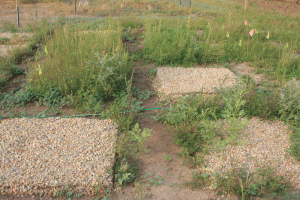
Start with a heaping helping of weeds in an orchard owned by an electrical engineer, then add in a weed scientist and a dash of Western IPM Center funding. What you get is electric weed control – a promising (dare we say shocking?) new way to control weeds in certain landscapes.

IPM Experience is Helping Schools Plan for Reopening Amid COVID Concerns
As students return to classrooms in the fall of 2020, coronavirus is very much on people’s minds. In the West, having an IPM program in place seems to be helping schools plan for reopening.
Feral Swine Wreak Havoc
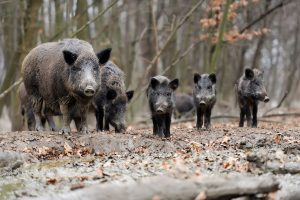
As pests go, wild pigs are huge – and hugely effective.

Bed Bug Website and Work Group Share Knowledge and Resources
Through a website or workshop, the members of the Western IPM Bed Bug Work Group can teach you everything you ever wanted to know about bed bugs – and then some.

Eco-Label Programs Promote IPM, but Aren’t Perfect
Eco-label programs have clear benefits and promote more sustainable pest-management and growing practices. They also provide certain benefits for growers but have downsides as well. Significant differences between the programs can make judging eco labels challenging for consumers, and with dozens of similar yet competing certification programs and standards, chaos is likely for the foreseeable future.

Nevada in Photos: Fighting Invasives on Land and Lake
Nevada’s state flag has the words “Battle Born” above a silver star and crossed sagebrush sprays, celebrating its creation during the American Civil War. Battle born is also a pretty good description of the efforts of many people working for state, federal and local agencies to keep invasive weeds in check in Nevada’s challenging landscapes. Here’s a look.

Tribal Bed Bug Workshop Dispels Myths
There is a lot of fear about bed bugs, and a stigma surrounding them that can keep some people from seeking help with a bed bug infestation. But bed bugs have been hanging around humans for a long time and aren’t going anywhere anytime soon.

Decoding Chemical Communications to Control Insects
University of California, Riverside chemical ecologist Jocelyn Millar identifies the chemical signals insects use to communicate, then synthesizes versions of them to help monitor, trap or disrupt their activities. Lygus bug is just one of dozens of species Millar and his team are working on. The common thread is that they all communicate chemically, and decoding those chemical signals can create new ways to control those species where they are pests.

VIDEO: Where to Get Good Gardening Advice
In this video, Ariel Agenbroad from University of Idaho offers great tips for home gardeners about where to get good pest-management advice.

VIDEO: Urban Farm Pest Pressures and Solutions
Learn about the pest pressures faced by urban farmers — and how integrated pest management provides economical solutions — with Ariel Agenbroad, Local Food & Farms Advisor with University of Idaho Extension.

Hill-Climbing Cows May Bring Big Benefits to Western Rangeland and Ranchers
Conventional wisdom says cows don’t go up steep slopes. They don’t climb hills and don’t travel very far from water. But some cows never got that memo, and researchers are looking into whether naturally hill-climbing cows can provide production and environmental benefits in the rugged West.
School IPM Protects Kids from Pests and Pesticides
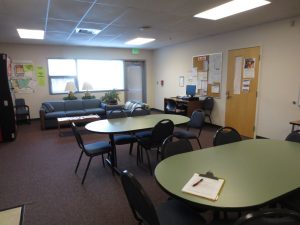
Both pests and pesticides are potentially harmful for kids and adults in schools. Common schools pests like the German cockroach or mice can carry disease and cause allergic responses. And children can be more at risk for harm from sprayed pesticides because of their behavior – playing on the floor or in grassy fields, for instance – and because of their developing physiology.

Grazing Guidelines for Noxious Weed Control
Researchers, ranchers, and land managers know that livestock grazing can be a valuable and selective noxious-weed management tool, and this guide summarizes all the effective techniques.
IPM Adoption is Widespread in the West
Many integrated pest management practices are so widely adopted in Western agriculture they have become conventional pest management. That is one of the key findings of a new report by the Western Integrated Pest Management Center titled Adoption and Impacts of Integrated Pest Management in Agriculture in the Western United States.

New Guide Helps Land Managers Control Medusahead
As an ecosystem-transformer species, medusahead is among the worst weeds. Not only does it compete for resources with more desirable species, but it changes ecosystem function to favor its own survival at the expense of the entire ecosystem.