

Washington Scientists Work to Protect Oysters from Burrowing Shrimp
For the past century, a silent war has waged in the tidal mudflats of Washington’s Willapa Bay. The combatants: native burrowing shrimp versus farmed Pacific oysters. Right now, the shrimp have the upper hand, but the oysters’ allies have been testing new weapons, hoping to turn the tide. One of those weapons? Sodium bicarbonate – the baking soda sitting on an upper shelf in many kitchen cupboards.
Research Examines Barriers to Grazing for National Forest Management
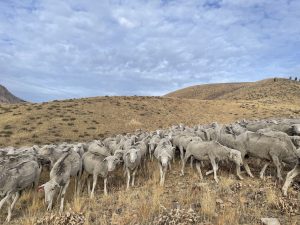
Targeted grazing – using livestock to intentionally manage vegetation – can excel at treating large patches of edible invasive plants and can also create fuel breaks to reduce wildfire risk. So why don’t U.S. Forest Service staff use it more often to manage national forests? That’s the question Briana Swette, a postdoctoral fellow working with Dr. Kelly Hopping at Boise State University, wanted to answer.
Plant Risk Evaluator Tool Helps Identify Potentially Problematic Plants
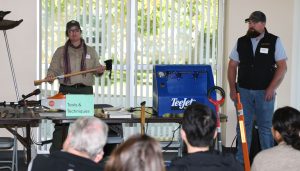
The easiest pest to manage is the one that’s not there. That’s why prevention and avoidance are first two principles of integrated pest management’s “PAMS Approach,” with monitoring and suppression following behind. It’s also the rationale behind the Plant Risk Evaluator Tool, an online database to evaluate the potential for ornamental and horticultural plants to become invasive weeds in different areas and environments.
Using UV Light to Kill Powdery Mildew on Grapes
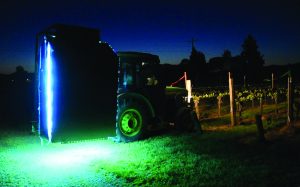
Instead of relying solely on fungicides to control powdery mildew on winegrapes, growers may one day – and one day reasonably soon – have an effective non-chemical option: light. Specifically, light in the form of spore-killing ultraviolet UV-C radiation, delivered directly to the plant by a self-driving tractor moving through vineyard rows autonomously at night.

Promoting IPM in Wenatchee Valley Pear Production
In some pear-growing regions in the Pacific Northwest, IPM is a widely accepted, effective and economical way to manage pear psylla and codling moth, the crop’s key insect pests. In the Wenatchee Valley, however, IPM adoption has been low and the barriers to adoption high. But researchers are working to change that.
Exploring a Fiery Method for Replacing Invasive Grasses
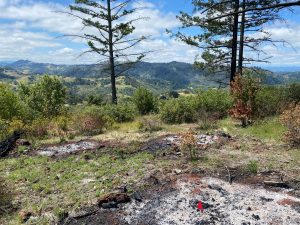
In California and throughout the West, land managers face huge challenges on huge acreage. Threats include invasive annual grasses, drier summers and changing fire regimes. To combat this combined threat, UC Davis researchers are testing a burn-and-replant method as a combined solution.
Growers Helping Growers Avoid a Devastating Cranberry Disease
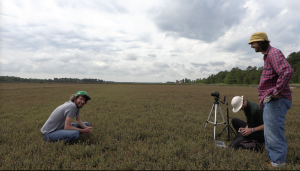
It sounds like an ad for a 1950s drive-in horror movie: Zombie plants emerge from New Jersey bogs! Can experts stop their catastrophic cross-county crawl before it’s too late? But this is not “The Day of the Triffids” meets “Creature from the Black Lagoon.” Instead, it’s the latest Western Integrated Pest Management Center-funded research, a bi-coastal project looking to keep West Coast cranberry farms safe from false blossom disease, an insect-spread pathogen that’s plaguing East Coast cranberry producers.
Work Group Aims to Make New Endangered Species Rules Workable
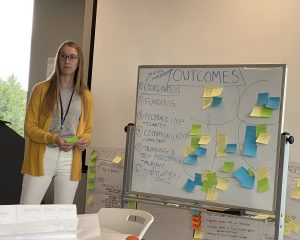
“If it’s so complex that it’s impossible, then no one wins.”
That was the key takeaway from a recent two-day workshop in Vancouver, Washington about implementing new U.S. Environmental Protection Agency pesticide-use rules to protect endangered and threatened species.

Chasing Knotweed on One River: 20 Years of Lessons Learned
Forks, Washington’s sits nestled in North America’s only temperate rainforest. Nearby rivers, fed by melting glaciers high in the Olympic mountains, are home to five species of wild salmon and hundreds of other species of native wildlife. But, like too many other landscapes in too many other places, Forks is threatened by non-native, invasive plants that can fundamentally alter the ecosystem at the expense of the region’s native plants and animals.

Using Giant Hornets’ Chemical Communications Against Them
When the Northern Giant Hornet was discovered in Washington state, state and federal officials mobilized quickly to try to eradicate it. Due to the efforts of that team, which included Dr. Jacqueline Serrano, an expert in detecting, decoding and synthesizing insect chemical signals, no nests or hornets have been found in the state since 2021.
Guam hasn’t been so fortunate. Invaded in 2016 by a different giant hornet, the Great Banded Hornet, the island is in danger of having the invasive, predatory insect become firmly established, which could damage Guam’s apiculture and agricultural industries. So it will be harder to eradicate – but with Western IPM Center funding, Serrano and Christopher Rosaria from the Guam Department of Agriculture’s Biosecurity Division are going to try.

Developing Augmented Biocontrol Recommendations for Tree Fruit Growers
When growers use a pesticide to control insects, they have a lot of information at their fingertips. The product’s label tells them what crops and pests the product can be used for, as well as the rate to apply and any temperature limits to be aware of. Biological control insects, like lacewings, don’t come with such labels.

Group Educates Health Care Providers about Pesticide-Related Illnesses
Pesticide Educational Resources Collaborative-Medical produces educational materials and resources on pesticides, specifically targeting health care providers so they can recognize, treat and report pesticide-related illnesses.

IPM Experience is Helping Schools Plan for Reopening Amid COVID Concerns
As students return to classrooms in the fall of 2020, coronavirus is very much on people’s minds. In the West, having an IPM program in place seems to be helping schools plan for reopening.
Dropping the Emerald Ash Borer Quarantine Could Impact the West
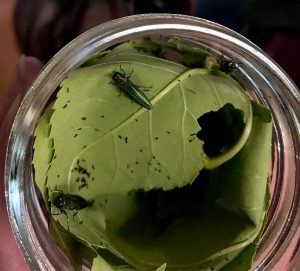
The U.S. Animal and Plant Health Inspection Service has proposed lifting the domestic quarantine designed to slow the spread of emerald ash borer, an action that could speed the destructive insect’s introduction into Western states that have so far kept it at bay.

VIDEO: Wireworms in Western Washington
Wireworms are wrecking havoc in some western Washington farms. This video looks at a trap-cropping experiment designed to lure them away from valuable vegetables.
Wireworms in Western Washington
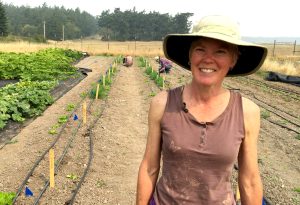
For more than two decades, Christine Langley has successfully run Lopez Harvest organic farm on Lopez Island in Washington state’s famed San Juan Islands. But for most of that, she wasn’t fighting wireworms. Now they’re her top pest problem.

Can Caging Orchards Protect Apples?
When brown marmorated stink bug hit the Mid-Atlantic region, it wreaked havoc with the tree fruit industry and disrupted effective IPM programs. Elizabeth Beers and her colleagues at Washington State University are working to make sure that doesn’t happen again in Washington’s valuable apple and pear orchards.

Feral Swine Wreak Havoc
As pests go, wild pigs are huge – and hugely effective.

Bed Bug Website and Work Group Share Knowledge and Resources
Through a website or workshop, the members of the Western IPM Bed Bug Work Group can teach you everything you ever wanted to know about bed bugs – and then some.
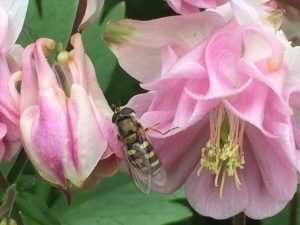
Rooting for the Underdogs of the Pollination World
As pollinating insects, bees get all the credit – but they don’t do all the work. new research is documenting the unsung heroes of the pollinating world.

Pest or Beneficial: Earwigs in Apples
For growers, a fundamental element of integrated pest management is knowing what pest and beneficial species are in your fields. But what if there’s an insect and no one knows if it’s good or bad? That was the question for apple growers about earwigs.

What’s Plaguing that Peony?
Proper identification of a disease is the critical first step for growers to apply the correct treatment. In peonies, proper disease identification was a problem. If a plant was diseased, growers assumed that their plants were sick with Botrytis gray mold. The reality was more complex.
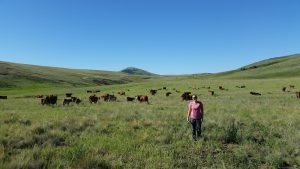
Grassland Restoration Effects on Native Bees and Spiders
Throughout the West, many native grasslands have been degraded – overgrazed, overtilled, burned or overrun by invasive weeds like Medusahead or cheatgrass. While many restoration efforts only look at plant communities or endangered species, this research looked at native spider and bee communities.

Eco-Label Programs Promote IPM, but Aren’t Perfect
Eco-label programs have clear benefits and promote more sustainable pest-management and growing practices. They also provide certain benefits for growers but have downsides as well. Significant differences between the programs can make judging eco labels challenging for consumers, and with dozens of similar yet competing certification programs and standards, chaos is likely for the foreseeable future.

VIDEO: Alfalfa Seed, Alkali Bees and IPM
Washington alfalfa seed growers go to great lengths to protect the bees that pollinate their crop. Those bees are native alkali bees that live underground in the Walla Walla Valley, and leaf cutter bees they import from Canada.
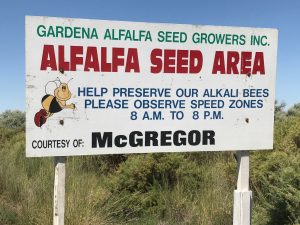
To Protect their Bees, Alfalfa Seed Growers Embrace IPM
A lot of growers take steps to protect beneficial insects as part of their integrated pest management programs, but how many have speed limits? Alfalfa seed growers in Washington’s Walla Walla Valley do.

Decoding Chemical Communications to Control Insects
University of California, Riverside chemical ecologist Jocelyn Millar identifies the chemical signals insects use to communicate, then synthesizes versions of them to help monitor, trap or disrupt their activities. Lygus bug is just one of dozens of species Millar and his team are working on. The common thread is that they all communicate chemically, and decoding those chemical signals can create new ways to control those species where they are pests.

VIDEO: Where to Get Good Gardening Advice
In this video, Ariel Agenbroad from University of Idaho offers great tips for home gardeners about where to get good pest-management advice.

VIDEO: Why Growers Embrace Salmon-Safe Farming
In growing numbers, farmers in the Walla Walla Valley are embracing salmon-safe farming practices to better manage their land, benefit local rivers – and get higher prices for their products.

VIDEO: Urban Farm Pest Pressures and Solutions
Learn about the pest pressures faced by urban farmers — and how integrated pest management provides economical solutions — with Ariel Agenbroad, Local Food & Farms Advisor with University of Idaho Extension.

VIDEO: Training Ag Professionals in IPM
A multi-state program in the Columbia River Basin is improving agricultural practices by training young ag professionals in integrated pest management.
Are Birds an Economic Pest on Northwest Dairies? New Research Aims to Find Out
That birds can be a pest for fruit growers is no surprise. But what about to cows? Are birds a pest on dairies? Do they bother the milk cows? And do they cause economic losses? Researchers in Washington state are trying to find out.

Hill-Climbing Cows May Bring Big Benefits to Western Rangeland and Ranchers
Conventional wisdom says cows don’t go up steep slopes. They don’t climb hills and don’t travel very far from water. But some cows never got that memo, and researchers are looking into whether naturally hill-climbing cows can provide production and environmental benefits in the rugged West.
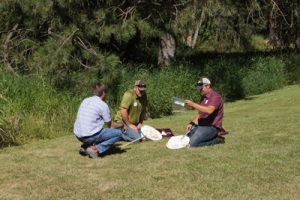
IPM Training Program Targets Young Ag Professionals in the Pacific Northwest
Identification of pests and beneficials is one of the first principles of integrated pest management, and the core of a train-the-trainers program that’s been successfully improving the skills of young ag professionals in rural Oregon, Washington and Idaho since 2009.

School IPM Protects Kids from Pests and Pesticides
Both pests and pesticides are potentially harmful for kids and adults in schools. Common schools pests like the German cockroach or mice can carry disease and cause allergic responses. And children can be more at risk for harm from sprayed pesticides because of their behavior – playing on the floor or in grassy fields, for instance – and because of their developing physiology.
IPM Adoption is Widespread in the West
Many integrated pest management practices are so widely adopted in Western agriculture they have become conventional pest management. That is one of the key findings of a new report by the Western Integrated Pest Management Center titled Adoption and Impacts of Integrated Pest Management in Agriculture in the Western United States.
Small Farms IPM Group Finds Invaders, Opportunities and Challenges
Bringing IPM information to small-scale farmers is a significant challenge, but one that has many potential benefits – including expanded opportunities to spot invasive pests and diseases.
IPM Curriculum for Elementary Students Creates InPESTigators
How do you get teachers interested in integrated pest management? Turn IPM into a science curriculum they can use in their classrooms.

New Guide Helps Land Managers Control Medusahead
As an ecosystem-transformer species, medusahead is among the worst weeds. Not only does it compete for resources with more desirable species, but it changes ecosystem function to favor its own survival at the expense of the entire ecosystem.
Center-Funded Website Helps Vets Treat Animals for Fleas, Ticks and Other Pests
Whether it’s cattle with face flies or a dog with ticks, vets throughout the West can now easily find the available treatment options in their state thanks to a new website built with Western IPM Center funding.

Center Funding Helps Develop a Better Way to Control Prionus Beetles
Hop growers in the Northwest – as well as a sweet cherry, apple and other fruit growers around the nation – now have a new mating disruption tool to combat the Prionus beetle and its root-boring larvae, thanks to research funded in part by the Western IPM Center.
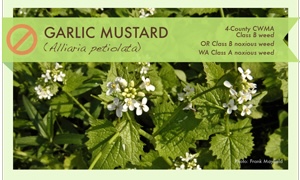
Educating an Urban Public and Land Managers about Invasive Weeds
Having a clear, consistent message and speaking with one voice is helpful when it comes to educating the public about invasive species. Here’s how the area around Portland, Oregon did it.
Using IPM to Battle Bed Bugs in Public Housing
Public housing presents unique pest-management challenges, including rapid turnover of residents, language and cultural barriers and even second-hand clothing and furniture. And those pest problems – especially when bedbugs are involved – can lead residents to resort to some pretty drastic and harmful pest control strategies.

Protecting Kids from Pests and Pesticides by Promoting IPM in Schools
Both pests and pesticides in schools can pose a health risk to children, so promoting IPM practices in schools is doubly important. That’s why the Western IPM Center has been helping Western researchers develop regional resources and promote school IPM.

Pest Management Strategic Plan Leads to Quick Action for Northwest Pears
Controlling pear psylla while also preserving pollinators and other beneficial insects emerged as the key pest-management challenges for growers in Washington and Oregon – and directly led to a “Psylla Summit” to address the challenge.

Progress against Onion Pests
An update to the Pest Management Strategic Plan for dry bulb storage onions shows progress against thrips and Iris yellow spot virus, but still challenges to overcome.