
Research Examines Barriers to Grazing for National Forest Management
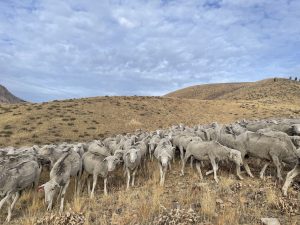
Targeted grazing – using livestock to intentionally manage vegetation – can excel at treating large patches of edible invasive plants and can also create fuel breaks to reduce wildfire risk. So why don’t U.S. Forest Service staff use it more often to manage national forests? That’s the question Briana Swette, a postdoctoral fellow working with Dr. Kelly Hopping at Boise State University, wanted to answer.

Tracking Ticks and Enhancing Awareness in Teton County, Wyoming
The Teton County Weed and Pest District was the first in Wyoming to launch a program to collect and test ticks for pathogens. Their findings are surprising some who believed Wyoming didn’t have any ticks.
Building Urban Agriculture in Arizona
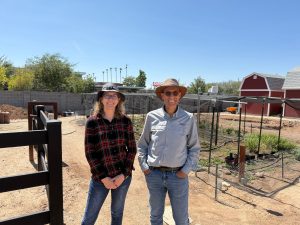
When supply chains collapsed and grocery shelves sat empty in the first years of the COVID pandemic, many people got interested in growing their own food. Most of those only had access to small plots, not dozens or hundreds of acres of land. So in 2022, the Center for Urban Smart Agriculture was launched at the University of Arizona to serve urban farmers throughout the state and build that sector of Arizona’s agricultural economy.
Work Group Aims to Make New Endangered Species Rules Workable
“If it’s so complex that it’s impossible, then no one wins.”
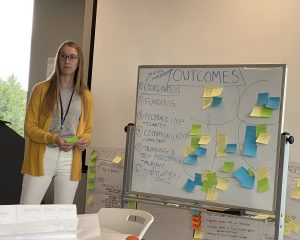
That was the key takeaway from a recent two-day workshop in Vancouver, Washington about implementing new U.S. Environmental Protection Agency pesticide-use rules to protect endangered and threatened species.

Managing Correctional Facility Mosquitoes Now, Acquiring Skills for Later
There have always been mosquitoes in the wetlands northwest of Salt Lake City, Utah, but few human until the opening of the Utah State Correctional Facility brought more than 4,000 new warm bodies to the area for the mosquitoes to feed on. Now, with Western IPM Center support, efforts are under way to control the mosquitoes and train inmates for jobs in vector control.
Understanding Hawaii’s Ungulate Issues
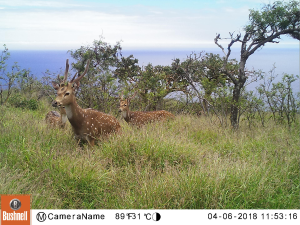
Hooved mammals – ungulates in scientific parlance – aren’t native to the archipelago but have been brought to the islands over the past centuries. Now, population explosions of wild pigs, feral sheep and goats, big-horned mouflon sheep and axis and black-tailed deer are altering ecosystems, affecting fisheries, imperiling agriculture and causing economic harm. New research aims to document how much damage those non-native ungulates are doing – the first step in understanding what could or should be done about it.

Chasing Knotweed on One River: 20 Years of Lessons Learned
Forks, Washington’s sits nestled in North America’s only temperate rainforest. Nearby rivers, fed by melting glaciers high in the Olympic mountains, are home to five species of wild salmon and hundreds of other species of native wildlife. But, like too many other landscapes in too many other places, Forks is threatened by non-native, invasive plants that can fundamentally alter the ecosystem at the expense of the region’s native plants and animals.

Targeted Grazing Can Reduce Communities’ Vulnerability to Wildfire
With the West in a state of permanent drought and under constant threat of wildfires, it’s more important than ever for land managers to control undesirable vegetation. For fire-prone communities scattered throughout the West’s tinder-dry hills and woods, it can be a matter of life and death. One tool that can help manage vegetation is grazing.

VIDEO: Moab Mosquito Outreach and Citizen Science Project
Moab, Utah is known as one the nation’s premier outdoor destinations, drawing millions of visitors each year to bike on its famed slickrock trails, hike through its painted canyons or 4×4 across its rugged desert. What Moab is not known for – and folks want to keep it that way – is mosquitoes.
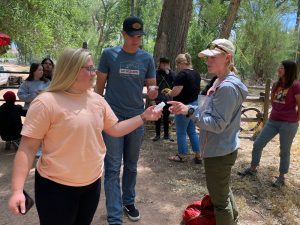
Moab Mosquito Project Engages Residents and Visitors
Moab, Utah is known as one the nation’s premier outdoor destinations, drawing millions of visitors each year to bike on its famed slickrock trails, hike through its painted canyons or 4×4 across its rugged desert.
What Moab is not known for – and the community wants to keep it that way – is mosquitoes.

Group Educates Health Care Providers about Pesticide-Related Illnesses
Pesticide Educational Resources Collaborative-Medical produces educational materials and resources on pesticides, specifically targeting health care providers so they can recognize, treat and report pesticide-related illnesses.
Electric Weed Control Shows Promise
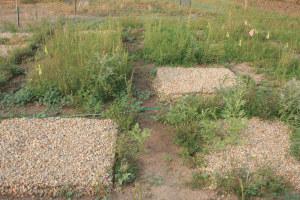
Start with a heaping helping of weeds in an orchard owned by an electrical engineer, then add in a weed scientist and a dash of Western IPM Center funding. What you get is electric weed control – a promising (dare we say shocking?) new way to control weeds in certain landscapes.

IPM Experience is Helping Schools Plan for Reopening Amid COVID Concerns
As students return to classrooms in the fall of 2020, coronavirus is very much on people’s minds. In the West, having an IPM program in place seems to be helping schools plan for reopening.

VIDEO: Studying the Ecological Impacts of Firebreaks
During wildfires, crew use bulldozers to cut firebreaks to remove vegetation and prevent the fire from spreading. It’s effective firefighting, but those bulldozer lines can have lasting impacts on the recovery of vegetation afterward. This video examines new research that is measuring those impacts and developing mitigations.

Preparing for Zika in Arizona
During a 2016 outbreak of the Zika virus in Florida, it took repeated aerial pesticide sprays to kill the mosquitoes spreading the disease. Arizona has the kind of mosquito that can transmit Zika, but doesn’t allow the kind of aerial spraying Florida needed to stop the disease’s spread. And that raises a serious public-health question: If an outbreak of Zika occurred, could Arizona stop it?

The Impact of Firebreaks in Southern California Sage Lands
During wildfires, crew use bulldozers to cut firebreaks to remove vegetation and prevent the fire from spreading. It’s effective firefighting, but those bulldozer lines can have lasting impacts on the recovery of vegetation afterward. New research is measuring those impacts and developing mitigations.
Dropping the Emerald Ash Borer Quarantine Could Impact the West
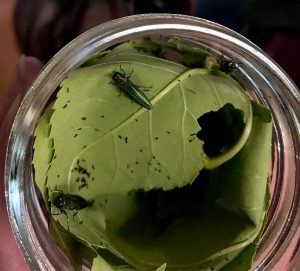
The U.S. Animal and Plant Health Inspection Service has proposed lifting the domestic quarantine designed to slow the spread of emerald ash borer, an action that could speed the destructive insect’s introduction into Western states that have so far kept it at bay.

Preparing for the Invasion: Emerald Ash Borer in Colorado
As part of its urban planning, the city of Denver recently asked residents what they wanted most in a revitalized downtown and they chose trees. It’s a shame so many of them are about to die.

Learning to Manage – and Live with – Coyotes in Southern California
Forrest Gump believed life was like a box of chocolates – you never know what you’re going to get inside. It’s much the same for graduate student Danielle Martinez, except she isn’t reaching for tasty chocolates. She’s digging into coyote stomachs as part of a larger research effort studying urban wildlife in Southern California.
VIDEO: Using IPM to Protect a Long-Vanished Community
In the Arizona desert, the National Park Service and the University of Arizona teamed up to develop an integrated pest management program to protect sensitive archaeological sites from digging pests. IPM is being used to protect a community that vanished 1,000 years ago.

Bed Bug Website and Work Group Share Knowledge and Resources
Through a website or workshop, the members of the Western IPM Bed Bug Work Group can teach you everything you ever wanted to know about bed bugs – and then some.
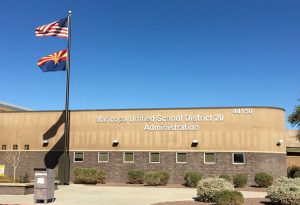
School District Creates a Healthier Environment by Adopting IPM
Every day, nearly 7,000 students come to the Maricopa Unified School District’s six elementary schools, two middle schools and one high school outside Phoenix, Arizona. They’re joined on the campuses by more than 800 teachers and other employees. And every one of those people comes to schools that are healthier to learn in and teach in because the district embraced integrated pest management.
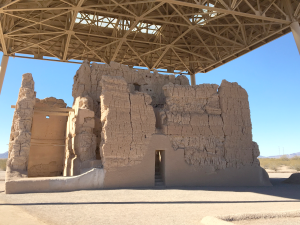
Protecting a Long-Vanished Community with IPM
The practices and principles of integrated pest management are used across the country to protect communities from pests. And in the Arizona desert, those same principles are being used to protect a community that disappeared 600 years ago.

Nevada in Photos: Fighting Invasives on Land and Lake
Nevada’s state flag has the words “Battle Born” above a silver star and crossed sagebrush sprays, celebrating its creation during the American Civil War. Battle born is also a pretty good description of the efforts of many people working for state, federal and local agencies to keep invasive weeds in check in Nevada’s challenging landscapes. Here’s a look.

Tribal Bed Bug Workshop Dispels Myths
There is a lot of fear about bed bugs, and a stigma surrounding them that can keep some people from seeking help with a bed bug infestation. But bed bugs have been hanging around humans for a long time and aren’t going anywhere anytime soon.
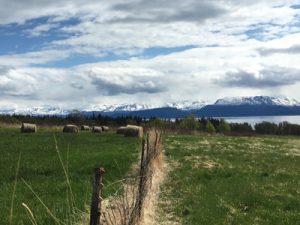
Alaska In Photos: America’s Arctic Agriculture
Alaska is huge, remote and still largely pristine. It’s 2.3 times the size of Texas, with a population of just 738,000 people and 175,000 moose. While small, the state’s ag industry is important. Ornamentals, aquaculture, potatoes and cattle are top crops, and home-based and small-scale production help improve food security. Here’s a little of what we saw and learned on a recent visit.
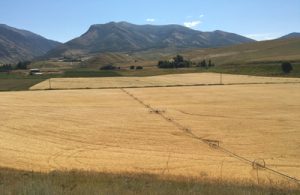
Utah in Photos: Managing Pests in a Unique State
Utah is one of the most urbanized states in the nation, with 90 percent of the population living on just 1.1 percent of the land. It’s also the second driest state, averaging less than 10 inches of rainfall a year, and has alkaline soils with low organic matter. It’s a challenging environment to farm in. Keeping invasive pests out of Utah – and minimizing the damage they cause once they arrive – is a major focus.

New Mexico in Photos: Loving the Land of Enchantment
In New Mexico, the chile pepper is king. Hay is grown on 40 times the acreage and pecans rack up nearly 4.5 times the farm sales, but you don’t see either of those crops on the “Welcome to New Mexico” signs as you drive into the state. You see red and green chile peppers. Chile isn’t a crop, it’s culture. Like Florida citrus and Idaho potatoes, New Mexico’s identity is tied to a crop.

Montana in Photos: Defending the Last Best Place
The state that calls itself “The Last Best Place” has a lot to protect from pests: vast fields of wheat and barley driving its agriculture sector, miles of mountains, forests and rangeland forming an outdoor paradise, and clear rivers and lakes at the upper end of the North American watershed. Here’s a look.
VIDEO: Battling Bird Cherry in Anchorage
European bird cherry, also known as the May Day tree, is one of the most pervasive invasive species in Anchorage, Alaska. Here’s how it got there, and what folks are now doing to get rid of it.

VIDEO: Gold Spotted Oak Borer, or GSOB, in Southern California
The gold spotted oak borer is a tiny beetle causing huge damage in Southern California. It infests the region’s towering oak species – coast live oak and canyon live oak – and can kill a centuries-old tree in just a year or two. This video follows the beetle from San Diego to Los Angeles counties to see what damage it’s doing and what many fear may come next.
VIDEO: Gold Spotted Oak Borer, or GSOB, in Irvine Regional Park
Weir Canyon in the Irvine Regional Park is the only known infestation of gold spotted oak borer in Orange County – and land managers are working hard to protect the park and keep the destructive beetle from spreading.

VIDEO: Learning about Insects in Anchorage
Anchorage-area sixth graders learn about forest insect ecology during the 43rd annual Outdoor Week at the Bureau of Land Management’s Campbell Creek Science Center.

VIDEO: Where to Get Good Gardening Advice
In this video, Ariel Agenbroad from University of Idaho offers great tips for home gardeners about where to get good pest-management advice.

VIDEO: Urban Farm Pest Pressures and Solutions
Learn about the pest pressures faced by urban farmers — and how integrated pest management provides economical solutions — with Ariel Agenbroad, Local Food & Farms Advisor with University of Idaho Extension.
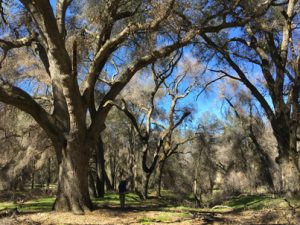
Gold Spotted Oak Borer Threatens Oak Woodlands and Ecosystems across Southern California
From San Diego County to Los Angeles County, oak trees are dying rapidly, killed by a tiny beetle called the gold spotted oak borer. In areas where the invasive pest has become established, it’s killing 80 to 90 percent of the mature oaks – a dieback that’s fundamentally changing the landscape and the ecosystem the oaks support.
School IPM Protects Kids from Pests and Pesticides
Both pests and pesticides are potentially harmful for kids and adults in schools. Common schools pests like the German cockroach or mice can carry disease and cause allergic responses. And children can be more at risk for harm from sprayed pesticides because of their behavior – playing on the floor or in grassy fields, for instance – and because of their developing physiology.
Small Farms IPM Group Finds Invaders, Opportunities and Challenges
Bringing IPM information to small-scale farmers is a significant challenge, but one that has many potential benefits – including expanded opportunities to spot invasive pests and diseases.
Colorado Battling Emerald Ash Borer with Coordination and Cooperation
In Boulder, Colorado, Assistant Forester Kendra Nash was marking a dead tree for removal, when her spray-painted “X” crossed a D-shaped exit hole characteristic of the insect. The September 2013 discovery was the first in Colorado of the invasive beetle that’s killed tens of millions of trees since first being detected in Michigan in 2002. Here’s what’s happened since.
IPM Curriculum for Elementary Students Creates InPESTigators
How do you get teachers interested in integrated pest management? Turn IPM into a science curriculum they can use in their classrooms.
Center-Funded Website Helps Vets Treat Animals for Fleas, Ticks and Other Pests
Whether it’s cattle with face flies or a dog with ticks, vets throughout the West can now easily find the available treatment options in their state thanks to a new website built with Western IPM Center funding.

Death From Above: Encouraging Natural Predators
Native predators like kestrels and barn owls can play a valuable role in controlling pests not only on farms, but also in parks, golf courses and large yards and gardens. While they rarely eliminate a pest problem, they can reduce the need for pesticide use and other pest-control measures.
Helping Native Bees and Other Pollinators Thrive in New Mexico
Gardeners, growers, land managers, school groundskeepers and others in New Mexico now have a few new ways to help honeybees and native wild bees thrive.

Educating an Urban Public and Land Managers about Invasive Weeds
Having a clear, consistent message and speaking with one voice is helpful when it comes to educating the public about invasive species. Here’s how the area around Portland, Oregon did it.
Using IPM to Battle Bed Bugs in Public Housing
Public housing presents unique pest-management challenges, including rapid turnover of residents, language and cultural barriers and even second-hand clothing and furniture. And those pest problems – especially when bedbugs are involved – can lead residents to resort to some pretty drastic and harmful pest control strategies.

Protecting Kids from Pests and Pesticides by Promoting IPM in Schools
Both pests and pesticides in schools can pose a health risk to children, so promoting IPM practices in schools is doubly important. That’s why the Western IPM Center has been helping Western researchers develop regional resources and promote school IPM.