
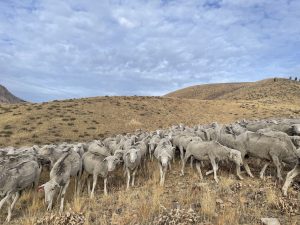
Research Examines Barriers to Grazing for National Forest Management
Targeted grazing – using livestock to intentionally manage vegetation – can excel at treating large patches of edible invasive plants and can also create fuel breaks to reduce wildfire risk. So why don’t U.S. Forest Service staff use it more often to manage national forests? That’s the question Briana Swette, a postdoctoral fellow working with Dr. Kelly Hopping at Boise State University, wanted to answer.
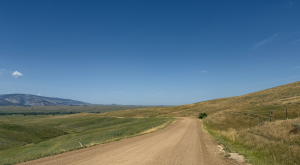
Wyoming Imagines a Future with Invasive Annual Grasses Under Control
In science fiction, the silent-invasion plot is well worn. An alien species slowly takes over its target land, stealthily replacing the native population until the invasion is complete. In the movies, a plucky band of scientists and citizens grow wise to the threat and fight back, but it’s often too late. It’s not science fiction when it’s actually happening, as it is Wyoming. The invaders there are invasive annual grasses like cheatgrass, medusahead and ventenata – but the scientists and citizens are fighting back.

Tracking Ticks and Enhancing Awareness in Teton County, Wyoming
The Teton County Weed and Pest District was the first in Wyoming to launch a program to collect and test ticks for pathogens. Their findings are surprising some who believed Wyoming didn’t have any ticks.
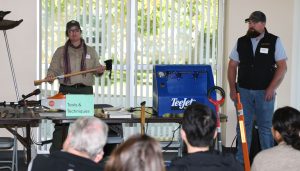
Plant Risk Evaluator Tool Helps Identify Potentially Problematic Plants
The easiest pest to manage is the one that’s not there. That’s why prevention and avoidance are first two principles of integrated pest management’s “PAMS Approach,” with monitoring and suppression following behind. It’s also the rationale behind the Plant Risk Evaluator Tool, an online database to evaluate the potential for ornamental and horticultural plants to become invasive weeds in different areas and environments.
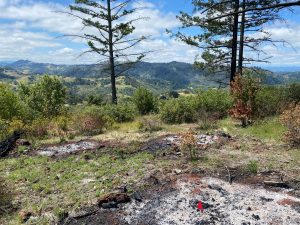
Exploring a Fiery Method for Replacing Invasive Grasses
In California and throughout the West, land managers face huge challenges on huge acreage. Threats include invasive annual grasses, drier summers and changing fire regimes. To combat this combined threat, UC Davis researchers are testing a burn-and-replant method as a combined solution.
Work Group Aims to Make New Endangered Species Rules Workable
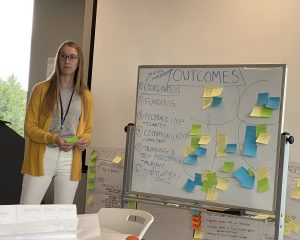
“If it’s so complex that it’s impossible, then no one wins.”
That was the key takeaway from a recent two-day workshop in Vancouver, Washington about implementing new U.S. Environmental Protection Agency pesticide-use rules to protect endangered and threatened species.

Managing Correctional Facility Mosquitoes Now, Acquiring Skills for Later
There have always been mosquitoes in the wetlands northwest of Salt Lake City, Utah, but few human until the opening of the Utah State Correctional Facility brought more than 4,000 new warm bodies to the area for the mosquitoes to feed on. Now, with Western IPM Center support, efforts are under way to control the mosquitoes and train inmates for jobs in vector control.
Understanding Hawaii’s Ungulate Issues
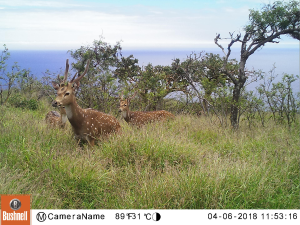
Hooved mammals – ungulates in scientific parlance – aren’t native to the archipelago but have been brought to the islands over the past centuries. Now, population explosions of wild pigs, feral sheep and goats, big-horned mouflon sheep and axis and black-tailed deer are altering ecosystems, affecting fisheries, imperiling agriculture and causing economic harm. New research aims to document how much damage those non-native ungulates are doing – the first step in understanding what could or should be done about it.

Chasing Knotweed on One River: 20 Years of Lessons Learned
Forks, Washington’s sits nestled in North America’s only temperate rainforest. Nearby rivers, fed by melting glaciers high in the Olympic mountains, are home to five species of wild salmon and hundreds of other species of native wildlife. But, like too many other landscapes in too many other places, Forks is threatened by non-native, invasive plants that can fundamentally alter the ecosystem at the expense of the region’s native plants and animals.

Hoping a Tiny Wasp Has a Huge Impact in Controlling Spotted Wing Drosophilia
As South Korean imports go, Ganaspis brasiliensis will never have the popular cachet of pop sensations BTS or TV dramas like Squid Game, but for small fruit growers the tiny wasp might become the biggest superstar of all. That’s because Ganaspis brasiliensis is a parasitic wasp that lays eggs into the larvae of the spotted-wing drosophila fruit fly, an invasive insect that’s been plaguing growers of small fruit and berries since it was accidentally introduced into the mainland United States in 2008.
A Humble Hedgerow Serves Pollinators and Beneficial Insects
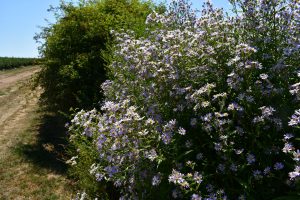
In an expansive field of organically grown blueberries at Humbug Farms in Independence, Oregon, the most interesting rows aren’t blueberries at all. Instead, they are carefully chosen rows of (mostly) native flowering shrubs that provide food for wild bees and habitat for beneficial insects. Hurray for the humble hedgerow.

Targeted Grazing Can Reduce Communities’ Vulnerability to Wildfire
With the West in a state of permanent drought and under constant threat of wildfires, it’s more important than ever for land managers to control undesirable vegetation. For fire-prone communities scattered throughout the West’s tinder-dry hills and woods, it can be a matter of life and death. One tool that can help manage vegetation is grazing.
VIDEO: Managing Invasive Species in Arches National Park
National Park Service crews use classic integrated pest management processes to manage unwanted invasive species in Utah’s Arches National Park and other nearby national parks and monuments.

Managing Invasive Species in Arches National Park Means Using IPM
Most people driving through Arches National Park in southeast Utah look up, marveling at the unique rock formations that give the park its name. Kelli Quinn looks down.
Quinn is a National Park Service team lead for the vegetation and ecological restoration program at Arches and three nearby national parks and monuments and it’s her job to keep the native, natural landscape as native and natural as possible. She and her colleagues use integrated pest management techniques to do that.

VIDEO: Moab Mosquito Outreach and Citizen Science Project
Moab, Utah is known as one the nation’s premier outdoor destinations, drawing millions of visitors each year to bike on its famed slickrock trails, hike through its painted canyons or 4×4 across its rugged desert. What Moab is not known for – and folks want to keep it that way – is mosquitoes.
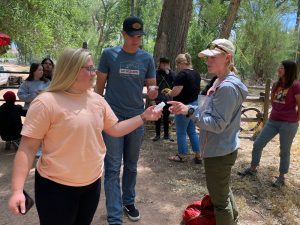
Moab Mosquito Project Engages Residents and Visitors
Moab, Utah is known as one the nation’s premier outdoor destinations, drawing millions of visitors each year to bike on its famed slickrock trails, hike through its painted canyons or 4×4 across its rugged desert.
What Moab is not known for – and the community wants to keep it that way – is mosquitoes.

Looking for Answers as Kochia Rolls Across the West
Kochia is a tumbling weed plaguing growers and ranchers from Central Canada to West Texas. “It’s salt tolerant, heat tolerant, cold tolerant,” said Kent Davis, a crop consultant with Crop Quest in Colorado. “I want to kill the damn stuff, there’s no question about it, but you have to admire it at the same time.”
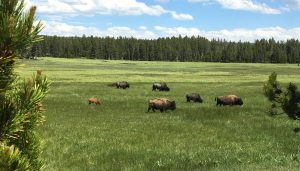
IPM in Yellowstone
The thing that makes integrated pest management so powerful is that it can be adapted to manage pests in any environment – even an environment as unique as Yellowstone National Park and a pest as big as a 900-pound bull elk.

IPM in Montana
Montana is known as “The Last Best Place.” An outdoor paradise, and home to wheat, barley and pulse crop production, Montana actively promotes integrated pest management to protect its agriculture and natural areas.
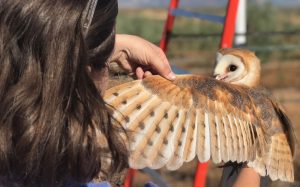
Helping Barn Owls Help Farmers
Barn owls are big, beautiful biocontrol.
“Barn owls are rodent-killing machines,” said Sara Kross, an assistant professor in environmental studies at Sacramento State University. “They are natural predators of gophers and voles which can be really horrible pests for agriculture.”

VIDEO: Studying the Ecological Impacts of Firebreaks
During wildfires, crew use bulldozers to cut firebreaks to remove vegetation and prevent the fire from spreading. It’s effective firefighting, but those bulldozer lines can have lasting impacts on the recovery of vegetation afterward. This video examines new research that is measuring those impacts and developing mitigations.

The Impact of Firebreaks in Southern California Sage Lands
During wildfires, crew use bulldozers to cut firebreaks to remove vegetation and prevent the fire from spreading. It’s effective firefighting, but those bulldozer lines can have lasting impacts on the recovery of vegetation afterward. New research is measuring those impacts and developing mitigations.
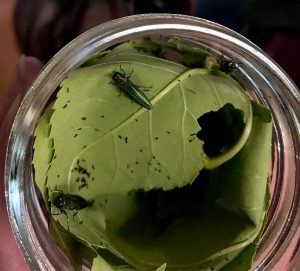
Dropping the Emerald Ash Borer Quarantine Could Impact the West
The U.S. Animal and Plant Health Inspection Service has proposed lifting the domestic quarantine designed to slow the spread of emerald ash borer, an action that could speed the destructive insect’s introduction into Western states that have so far kept it at bay.

Preparing for the Invasion: Emerald Ash Borer in Colorado
As part of its urban planning, the city of Denver recently asked residents what they wanted most in a revitalized downtown and they chose trees. It’s a shame so many of them are about to die.
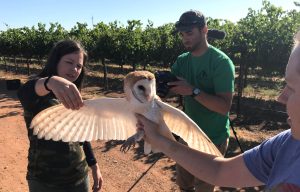
VIDEO: Helping Barn Owls Help Growers
Barn owls are rodent-killing machines – natural predators of gophers and voles and other rodent pests of agriculture. This video looks at new research helping growers use both the owls and chemicals, in concert and safely.
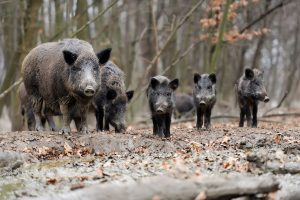
Feral Swine Wreak Havoc
As pests go, wild pigs are huge – and hugely effective.

Learning to Manage – and Live with – Coyotes in Southern California
Forrest Gump believed life was like a box of chocolates – you never know what you’re going to get inside. It’s much the same for graduate student Danielle Martinez, except she isn’t reaching for tasty chocolates. She’s digging into coyote stomachs as part of a larger research effort studying urban wildlife in Southern California.
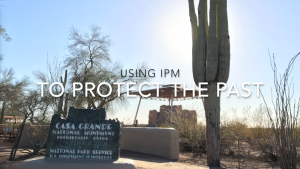
VIDEO: Using IPM to Protect a Long-Vanished Community
In the Arizona desert, the National Park Service and the University of Arizona teamed up to develop an integrated pest management program to protect sensitive archaeological sites from digging pests. IPM is being used to protect a community that vanished 1,000 years ago.
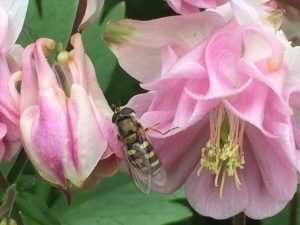
Rooting for the Underdogs of the Pollination World
As pollinating insects, bees get all the credit – but they don’t do all the work. new research is documenting the unsung heroes of the pollinating world.
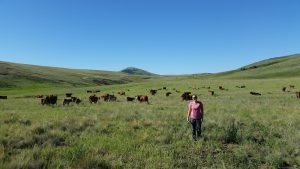
Grassland Restoration Effects on Native Bees and Spiders
Throughout the West, many native grasslands have been degraded – overgrazed, overtilled, burned or overrun by invasive weeds like Medusahead or cheatgrass. While many restoration efforts only look at plant communities or endangered species, this research looked at native spider and bee communities.
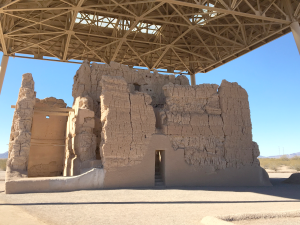
Protecting a Long-Vanished Community with IPM
The practices and principles of integrated pest management are used across the country to protect communities from pests. And in the Arizona desert, those same principles are being used to protect a community that disappeared 600 years ago.

Nevada in Photos: Fighting Invasives on Land and Lake
Nevada’s state flag has the words “Battle Born” above a silver star and crossed sagebrush sprays, celebrating its creation during the American Civil War. Battle born is also a pretty good description of the efforts of many people working for state, federal and local agencies to keep invasive weeds in check in Nevada’s challenging landscapes. Here’s a look.

Decoding Chemical Communications to Control Insects
University of California, Riverside chemical ecologist Jocelyn Millar identifies the chemical signals insects use to communicate, then synthesizes versions of them to help monitor, trap or disrupt their activities. Lygus bug is just one of dozens of species Millar and his team are working on. The common thread is that they all communicate chemically, and decoding those chemical signals can create new ways to control those species where they are pests.
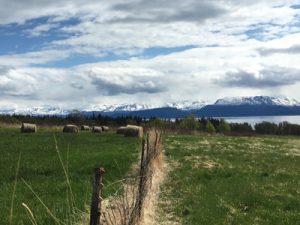
Alaska In Photos: America’s Arctic Agriculture
Alaska is huge, remote and still largely pristine. It’s 2.3 times the size of Texas, with a population of just 738,000 people and 175,000 moose. While small, the state’s ag industry is important. Ornamentals, aquaculture, potatoes and cattle are top crops, and home-based and small-scale production help improve food security. Here’s a little of what we saw and learned on a recent visit.
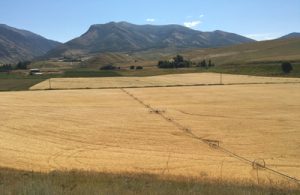
Utah in Photos: Managing Pests in a Unique State
Utah is one of the most urbanized states in the nation, with 90 percent of the population living on just 1.1 percent of the land. It’s also the second driest state, averaging less than 10 inches of rainfall a year, and has alkaline soils with low organic matter. It’s a challenging environment to farm in. Keeping invasive pests out of Utah – and minimizing the damage they cause once they arrive – is a major focus.

New Mexico in Photos: Loving the Land of Enchantment
In New Mexico, the chile pepper is king. Hay is grown on 40 times the acreage and pecans rack up nearly 4.5 times the farm sales, but you don’t see either of those crops on the “Welcome to New Mexico” signs as you drive into the state. You see red and green chile peppers. Chile isn’t a crop, it’s culture. Like Florida citrus and Idaho potatoes, New Mexico’s identity is tied to a crop.

Montana in Photos: Defending the Last Best Place
The state that calls itself “The Last Best Place” has a lot to protect from pests: vast fields of wheat and barley driving its agriculture sector, miles of mountains, forests and rangeland forming an outdoor paradise, and clear rivers and lakes at the upper end of the North American watershed. Here’s a look.
VIDEO: Battling Bird Cherry in Anchorage
European bird cherry, also known as the May Day tree, is one of the most pervasive invasive species in Anchorage, Alaska. Here’s how it got there, and what folks are now doing to get rid of it.

VIDEO: Controlling Invasive Species on Wyoming’s Snake River
The Teton County Weed & Pest District’s Snake River Project helps keep invasive weeds from getting established in the Snake River corridor in western Wyoming. Here’s a look at one part of that effort.

VIDEO: Gold Spotted Oak Borer, or GSOB, in Southern California
The gold spotted oak borer is a tiny beetle causing huge damage in Southern California. It infests the region’s towering oak species – coast live oak and canyon live oak – and can kill a centuries-old tree in just a year or two. This video follows the beetle from San Diego to Los Angeles counties to see what damage it’s doing and what many fear may come next.
VIDEO: Gold Spotted Oak Borer, or GSOB, in Irvine Regional Park
Weir Canyon in the Irvine Regional Park is the only known infestation of gold spotted oak borer in Orange County – and land managers are working hard to protect the park and keep the destructive beetle from spreading.

VIDEO: Learning about Insects in Anchorage
Anchorage-area sixth graders learn about forest insect ecology during the 43rd annual Outdoor Week at the Bureau of Land Management’s Campbell Creek Science Center.
VIDEO: Biocontrol on Montana’s National Bison Range
Biocontrol helps the National Bison Range in Montana manage invasive weeds. Here’s how they do it – and you can too.
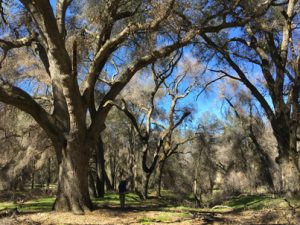
Gold Spotted Oak Borer Threatens Oak Woodlands and Ecosystems across Southern California
From San Diego County to Los Angeles County, oak trees are dying rapidly, killed by a tiny beetle called the gold spotted oak borer. In areas where the invasive pest has become established, it’s killing 80 to 90 percent of the mature oaks – a dieback that’s fundamentally changing the landscape and the ecosystem the oaks support.

Hill-Climbing Cows May Bring Big Benefits to Western Rangeland and Ranchers
Conventional wisdom says cows don’t go up steep slopes. They don’t climb hills and don’t travel very far from water. But some cows never got that memo, and researchers are looking into whether naturally hill-climbing cows can provide production and environmental benefits in the rugged West.

Grazing Guidelines for Noxious Weed Control
Researchers, ranchers, and land managers know that livestock grazing can be a valuable and selective noxious-weed management tool, and this guide summarizes all the effective techniques.

Colorado Battling Emerald Ash Borer with Coordination and Cooperation
In Boulder, Colorado, Assistant Forester Kendra Nash was marking a dead tree for removal, when her spray-painted “X” crossed a D-shaped exit hole characteristic of the insect. The September 2013 discovery was the first in Colorado of the invasive beetle that’s killed tens of millions of trees since first being detected in Michigan in 2002. Here’s what’s happened since.
Early Detection Combats Weed Invaders
Managing invasive weeds is a lot like planning a military defense. It’s easier to defeat a small number of invaders than a large army. It’s easier to respond to a limited incursion than fight a multi-front battle. And having an early warning system can make all the difference. In the fight against invasive weeds in Montana, early detection and rapid response is a key strategy for keeping some of the West’s worst weeds from gaining a foothold in the state.

Montana Develops Weed Seedling Guide for the Northern Great Plains
Rapid and accurate identification of weeds at the seedling stage can save producers and land managers time and money but most weed identification guides only provide information about the mature stage of the plants. Not this one.

New Guide Helps Land Managers Control Medusahead
As an ecosystem-transformer species, medusahead is among the worst weeds. Not only does it compete for resources with more desirable species, but it changes ecosystem function to favor its own survival at the expense of the entire ecosystem.